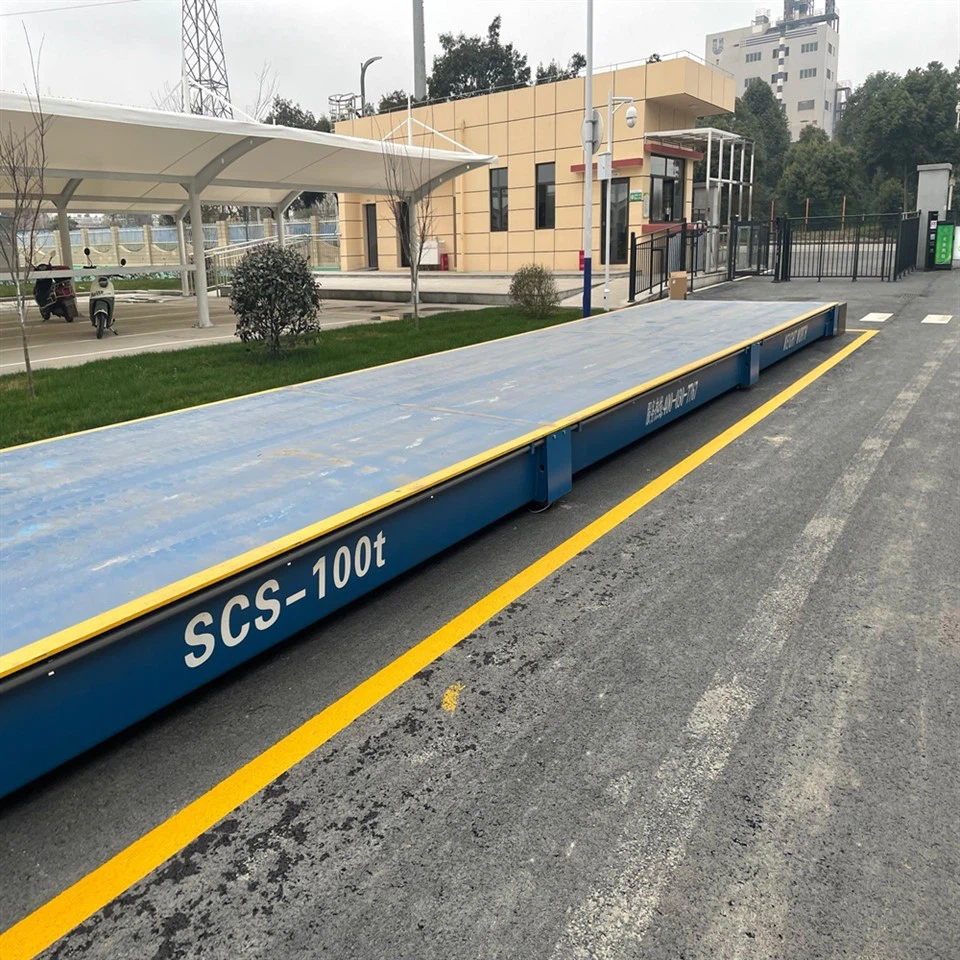
Hey there! As a supplier of Chemical Floor Scales, I've been getting a lot of questions lately about the resolution of these nifty devices. So, I thought I'd sit down and break it all down for you in a way that's easy to understand.


First off, let's talk about what resolution actually means in the context of chemical floor scales. Resolution refers to the smallest increment that a scale can measure. In simpler terms, it's how precise the scale can be when weighing your chemicals. For example, if a scale has a resolution of 0.1 grams, it can measure weights in increments of 0.1 grams. That means it can tell the difference between a weight of 10.0 grams and 10.1 grams.
Why is resolution important when it comes to chemical floor scales? Well, in the world of chemicals, precision is key. Whether you're mixing up a batch of chemicals in a lab or weighing out ingredients for a large - scale industrial process, you need to know exactly how much of each chemical you're using. A scale with a high resolution can help you achieve that level of precision, ensuring that your chemical mixtures are accurate and consistent.
Let's take a look at some of the factors that can affect the resolution of chemical floor scales. One of the main factors is the load cell. The load cell is the part of the scale that actually measures the weight. Different load cells have different levels of sensitivity, which directly impacts the resolution of the scale. High - quality load cells can provide a higher resolution, allowing for more precise measurements.
Another factor is the scale's capacity. Generally speaking, the higher the capacity of the scale, the lower the resolution. For example, a scale with a capacity of 1000 kilograms might have a resolution of 1 kilogram, while a scale with a capacity of 10 kilograms might have a resolution of 0.1 grams. This is because as the scale needs to handle larger weights, it becomes more difficult to measure small increments accurately.
Now, let's dive into the different types of chemical floor scales and how their resolution might vary.
Low Profile Floor Scales
Low Profile Floor Scales are great for applications where you need to load and unload items easily. They have a low height, making it convenient to roll pallets or other heavy items onto the scale. When it comes to resolution, these scales can vary depending on their capacity and the quality of their load cells. For smaller capacity low profile floor scales, you can often get a relatively high resolution. You can check out more about Low Profile Floor Scales here. These scales are often used in laboratories or small - scale chemical production facilities where precision is important.
Stainless Steel Floor Scales
Stainless Steel Floor Scales are known for their durability and resistance to corrosion, which makes them ideal for use in chemical environments. The resolution of stainless steel floor scales can also vary. They are available in a wide range of capacities, from small bench - top models to large industrial scales. If you're working in a chemical plant where you need to weigh large quantities of chemicals, a stainless steel floor scale with a lower resolution might be sufficient. However, if you're in a research lab where precision is crucial, you'll want to look for a stainless steel floor scale with a higher resolution. You can find more information on Stainless Steel Floor Scales here.
Explosion Proof Floor Scales
Explosion Proof Floor Scales are designed for use in hazardous environments where there is a risk of explosion. These scales need to meet strict safety standards, which can also affect their resolution. Due to the additional safety features, explosion - proof scales might have a slightly lower resolution compared to non - explosion - proof scales. However, they are still capable of providing accurate measurements for most chemical applications. If you're working in an environment where safety is a top priority, you can explore Explosion Proof Floor Scales here.
When choosing a chemical floor scale, it's important to consider your specific needs. Think about the types of chemicals you'll be weighing, the quantity of chemicals, and the level of precision you require. If you're working with expensive or highly reactive chemicals, you'll definitely want a scale with a high resolution. On the other hand, if you're just doing some rough weighing for general chemical storage, a scale with a lower resolution might be sufficient.
It's also a good idea to look for a scale that offers additional features such as tare function, which allows you to zero out the weight of a container so you can measure only the weight of the chemical inside. Some scales also come with digital displays that make it easy to read the weight, and they may have connectivity options to transfer the weight data to a computer or other device.
As a supplier of chemical floor scales, I've seen firsthand how important it is to choose the right scale for your needs. We offer a wide range of chemical floor scales with different resolutions and capacities to suit various applications. Whether you're a small - scale laboratory or a large - scale industrial facility, we can help you find the perfect scale.
If you're interested in learning more about our chemical floor scales or have any questions about resolution or other features, don't hesitate to reach out. We're here to help you make an informed decision and ensure that you get the most accurate and reliable scale for your chemical weighing needs.
In conclusion, the resolution of chemical floor scales is a crucial factor to consider when choosing a scale. It can have a big impact on the accuracy and precision of your chemical measurements. By understanding the factors that affect resolution and the different types of scales available, you can make a better choice for your specific application. So, if you're in the market for a chemical floor scale, take the time to do your research and find a scale that meets your requirements. And remember, we're here to assist you every step of the way.
References
- "Principles of Weighing Technology" by John Doe
- "Industrial Scale Handbook" by Jane Smith