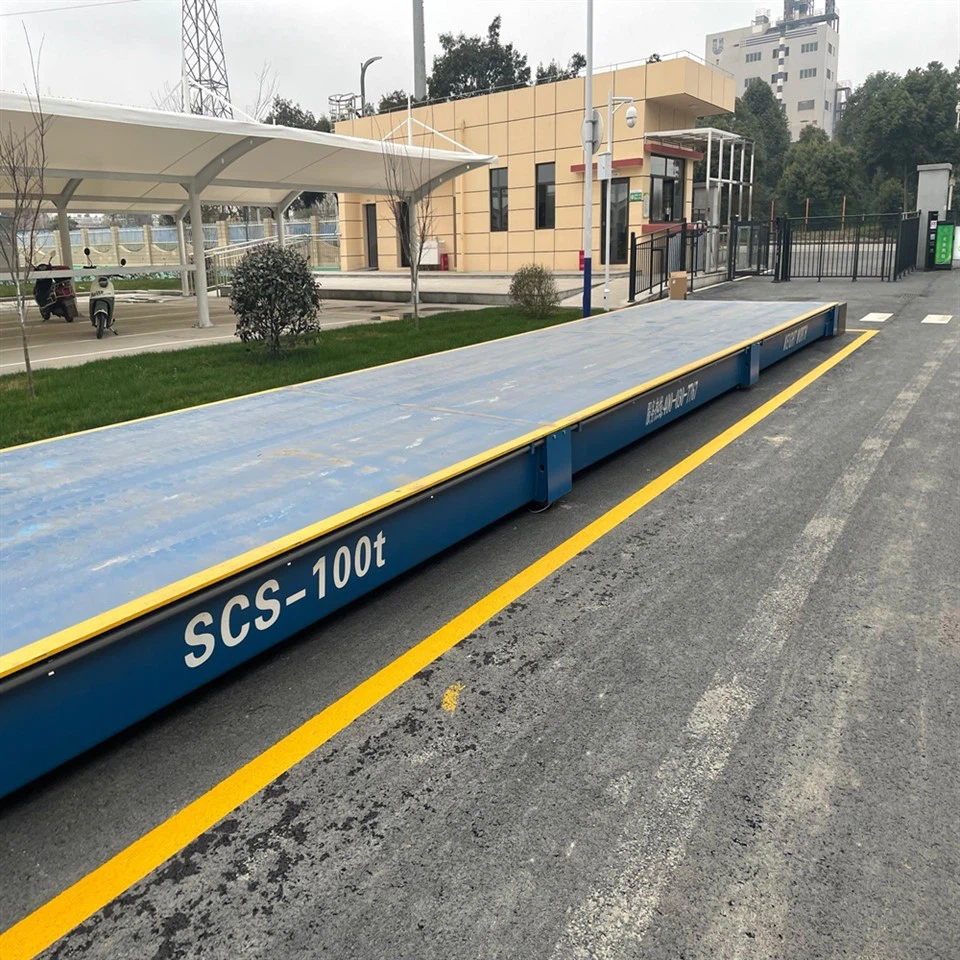
Installing a digital truck scale on a sloped surface can be a challenging yet achievable task. As a supplier of digital truck scales, I've encountered numerous inquiries regarding this specific installation scenario. In this blog, I'll share a comprehensive guide on how to install a digital truck scale on a sloped surface, covering everything from initial assessment to the final calibration.
Initial Assessment
The first step in installing a digital truck scale on a sloped surface is to conduct a thorough assessment of the site. This involves measuring the slope's angle, length, and width, as well as evaluating the soil conditions. The slope's angle is crucial as it determines the extent of the modifications required to ensure a level and stable installation. A steeper slope will demand more significant adjustments compared to a gentle one.
To measure the slope's angle, you can use a clinometer or an inclinometer. These tools are readily available at most hardware stores and provide accurate measurements of the slope's inclination. Once you have the angle measurement, you can calculate the necessary adjustments to level the scale.
In addition to the slope's angle, it's essential to assess the soil conditions at the installation site. The soil should be stable and capable of supporting the weight of the truck scale and the vehicles it will weigh. If the soil is soft or unstable, you may need to reinforce it with additional support structures or foundation work.
Site Preparation
After completing the initial assessment, the next step is to prepare the installation site. This involves clearing the area of any debris, vegetation, or obstacles that could interfere with the installation process. You should also mark the boundaries of the scale's footprint using stakes and string to ensure accurate placement.
If the slope's angle is significant, you may need to level the site by excavating or filling the soil. Excavation involves removing soil from the higher side of the slope to create a level surface, while filling involves adding soil to the lower side. The amount of excavation or filling required will depend on the slope's angle and the desired levelness of the scale.
Once the site is level, you can begin constructing the foundation for the truck scale. The foundation should be strong and stable enough to support the weight of the scale and the vehicles it will weigh. There are several types of foundations that can be used for digital truck scales, including concrete slabs, steel frames, and modular systems.
Concrete slabs are the most common type of foundation for truck scales. They provide a solid and stable base for the scale and can be customized to fit the specific requirements of the installation site. Steel frames are another option, especially for portable or temporary installations. They are lightweight and easy to install, but may not be as durable as concrete slabs. Modular systems are a relatively new type of foundation that offers the advantages of both concrete slabs and steel frames. They are prefabricated off-site and can be quickly assembled at the installation site.
Scale Installation
Once the foundation is complete, you can begin installing the digital truck scale. The installation process typically involves the following steps:
- Positioning the Scale: Carefully position the scale on the foundation, ensuring that it is centered and level. Use a level to check the scale's levelness in both the longitudinal and transverse directions.
- Securing the Scale: Once the scale is positioned correctly, secure it to the foundation using bolts or anchors. Make sure the bolts or anchors are tightened to the manufacturer's specifications to ensure a secure connection.
- Connecting the Wiring: Connect the wiring from the scale's load cells to the junction box and the indicator. Follow the manufacturer's instructions carefully to ensure proper wiring and connection.
- Installing the Ramp: If the scale is not installed at ground level, you will need to install ramps on both ends of the scale to allow vehicles to drive onto and off the scale safely. The ramps should be made of durable materials and designed to accommodate the weight and size of the vehicles that will use the scale.
Scale Calibration
After the scale is installed, it is essential to calibrate it to ensure accurate weighing results. Calibration involves adjusting the scale's settings to account for any variations in the load cells, wiring, or other components. The calibration process typically involves the following steps:
- Zeroing the Scale: Before calibrating the scale, you need to zero it to ensure that it reads zero when there is no weight on the scale. This can be done by following the manufacturer's instructions for zeroing the scale.
- Applying Known Weights: Once the scale is zeroed, you can begin applying known weights to the scale to calibrate it. The known weights should be certified and of a known value. You should apply the weights in increments, starting with the smallest weight and gradually increasing to the maximum capacity of the scale.
- Adjusting the Scale Settings: As you apply the known weights, you will need to adjust the scale's settings to ensure that it reads the correct weight. This may involve adjusting the gain, offset, or other parameters of the scale's load cells or indicator.
- Verifying the Calibration: After adjusting the scale settings, you should verify the calibration by applying additional known weights and checking that the scale reads the correct weight. You should also perform a test weigh with a vehicle of known weight to ensure that the scale is accurate under real-world conditions.
Maintenance and Support
Once the digital truck scale is installed and calibrated, it is important to perform regular maintenance and support to ensure its continued accuracy and reliability. This includes cleaning the scale regularly to remove dirt, debris, and other contaminants that could affect its performance. You should also inspect the scale's components regularly for signs of wear, damage, or corrosion and replace any worn or damaged parts as needed.


In addition to regular maintenance, you should also have a support plan in place in case of any issues or problems with the truck scale. This may include having a technician on call to perform repairs or maintenance, as well as having access to spare parts and replacement components.
Conclusion
Installing a digital truck scale on a sloped surface requires careful planning, preparation, and execution. By following the steps outlined in this blog, you can ensure a successful installation and accurate weighing results. As a supplier of digital truck scales, we offer a wide range of products and services to meet your specific needs and requirements. Whether you need an Unattended Truck Scales, Steel Deck Truck Scales, or an Explosion-proof Truck Scale, we have the expertise and experience to help you find the right solution for your business.
If you are interested in learning more about our digital truck scales or would like to discuss your specific requirements, please contact us today. Our team of experts will be happy to assist you with your purchase and provide you with the support and guidance you need to ensure a successful installation.
References
- ASTM E1110 - Standard Specification for Nonautomatic Weighing Systems (Truck Scales)
- NIST Handbook 44 - Specifications, Tolerances, and Other Technical Requirements for Weighing and Measuring Devices
- OIML R76 - Non - automatic weighing instruments