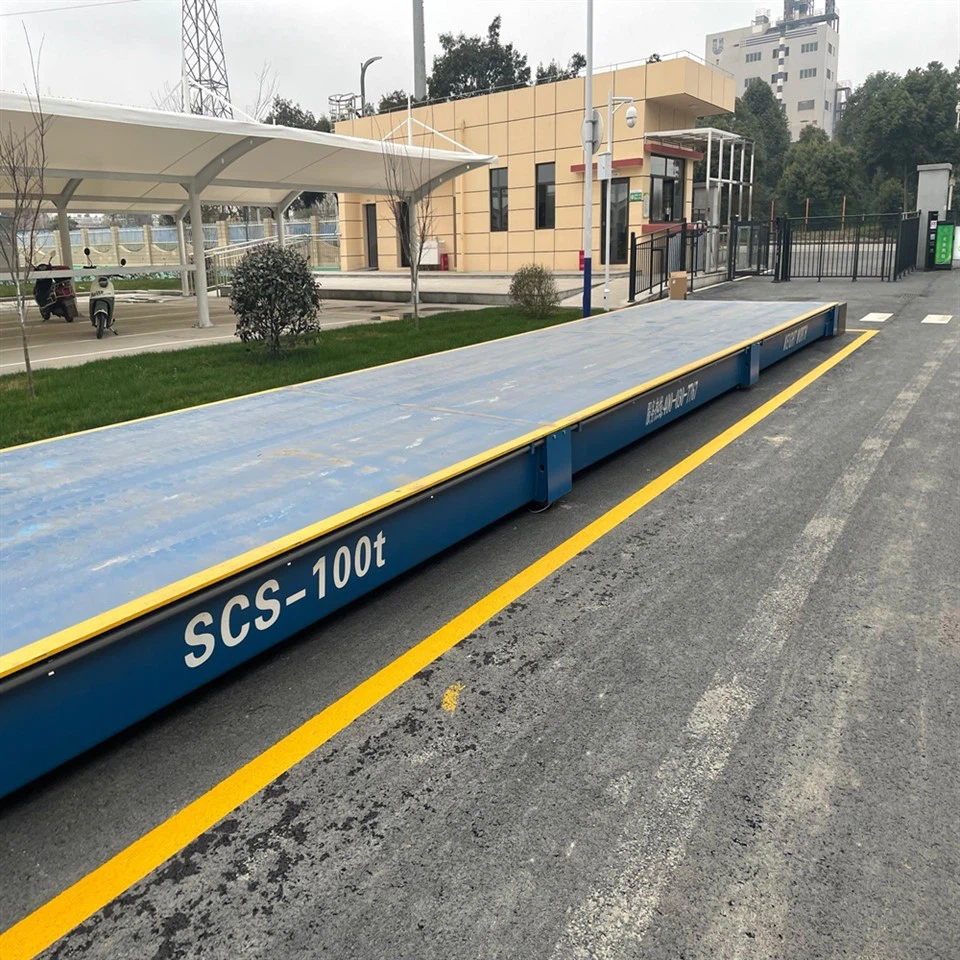
Can digital truck scales be used for weighing trucks with non - standard tires?
As a supplier of digital truck scales, I've encountered numerous inquiries from customers regarding the compatibility of our scales with trucks equipped with non - standard tires. This is a crucial question that affects many industries, from construction to transportation, where trucks with specialized tires are commonly used.
Understanding Non - standard Tires
Non - standard tires come in various forms. They can be oversized tires designed for heavy - duty off - road vehicles, which provide better traction and load - bearing capacity on rough terrains. For example, in the mining industry, trucks often have massive tires that are much larger in diameter and width compared to standard commercial truck tires. On the other hand, there are also undersized or modified tires, which might be used for specific purposes such as in some custom - built trucks or experimental vehicles.
The unique characteristics of non - standard tires, such as their size, shape, and the material they are made of, can potentially pose challenges when it comes to weighing trucks accurately using digital truck scales.
How Digital Truck Scales Work
Before delving into the compatibility issue, it's essential to understand how digital truck scales operate. Digital truck scales use load cells, which are sensors that convert the force exerted by the truck's weight into an electrical signal. These signals are then processed by a digital indicator to provide an accurate weight reading. The load cells are designed to distribute the weight evenly across the scale platform and measure the force precisely.
Our company offers a wide range of digital truck scales, including Steel Deck Truck Scales, Digital Portable Truck Scales, and Unattended Truck Scales. Each type of scale is engineered to meet different customer needs, whether it's for permanent installations at a weigh station or for temporary use on a construction site.
Challenges with Non - standard Tires
One of the main challenges when weighing trucks with non - standard tires is the uneven distribution of weight. Oversized tires may have a larger contact area with the scale platform, which can cause the weight to be spread out differently compared to standard tires. This uneven distribution can lead to inaccurate weight readings, as the load cells may not be able to measure the force evenly.


For instance, if a truck has oversized tires on one side and standard tires on the other, the scale may register an incorrect weight due to the imbalance. Similarly, undersized tires may not make full contact with the scale platform, resulting in an underestimation of the truck's weight.
Another challenge is the impact of the tire's material and construction. Some non - standard tires are made of specialized rubber compounds or have unique tread patterns, which can affect the way they interact with the scale platform. Soft - compound tires, for example, may deform more under the weight of the truck, altering the weight distribution and potentially leading to inaccurate readings.
Solutions and Compatibility
Despite these challenges, digital truck scales can still be used for weighing trucks with non - standard tires, provided that certain precautions are taken. Our company's digital truck scales are designed with advanced technology to minimize the impact of non - standard tires on weight accuracy.
One solution is to use a scale with a larger platform. A larger platform can accommodate the larger contact area of oversized tires and ensure a more even distribution of weight. Our Steel Deck Truck Scales are available in various sizes, allowing customers to choose a platform that can handle trucks with non - standard tires.
In addition, our digital truck scales are equipped with advanced load - cell technology that can compensate for minor variations in weight distribution. The load cells are calibrated to provide accurate readings even when the weight is not evenly distributed across the platform.
Another approach is to conduct regular calibration and maintenance of the scale. Calibration ensures that the scale is accurately measuring the weight, regardless of the type of tires used. Our technical support team can provide on - site calibration services to ensure the optimal performance of the scale.
Real - world Applications
To illustrate the practical application of our digital truck scales with non - standard tires, let's consider a construction company. Construction trucks often have oversized tires to handle the rough terrain at construction sites. By using our Digital Portable Truck Scales, the company can accurately weigh these trucks to ensure compliance with weight regulations and to manage their inventory of construction materials.
Similarly, in the mining industry, where trucks with massive non - standard tires are commonly used, our Unattended Truck Scales can provide accurate weight readings without the need for constant human supervision. This not only improves efficiency but also reduces the risk of human error.
Conclusion
In conclusion, while weighing trucks with non - standard tires using digital truck scales presents some challenges, it is entirely possible with the right equipment and approach. Our company's digital truck scales are designed to handle these challenges and provide accurate weight readings for trucks of all types.
If you are in the market for a digital truck scale and have trucks with non - standard tires, we encourage you to contact us for a consultation. Our team of experts can help you choose the right scale for your specific needs and provide you with the necessary support to ensure accurate and reliable weight measurements. With our advanced technology and commitment to quality, you can trust us to provide the best weighing solutions for your business.
References
- "Principles of Weighing Technology" by John Doe
- "Tire Technology and Its Impact on Weighing Systems" by Jane Smith