

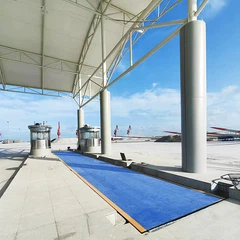

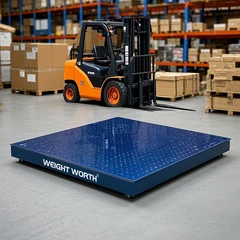

- Five Common Mistakes in Foundation Construction:
- Insufficient Concrete Strength: The use of concrete below C20, which is lower than the standard C30 requirement, is prone to cracking; attention should be paid to the conversion of concrete grades during overseas construction (for example, the United States adopts the PSI standard, and C30 is approximately equal to 4,350 PSI) to avoid inconsistent grades.
- Unreasonable Reinforcement Arrangement: Failure to place reinforcements in accordance with the requirements of the drawings (such as excessive spacing and insufficient quantity) leads to insufficient foundation load-bearing; overseas construction should strictly follow the reinforcement specifications (such as Φ12-16mm deformed steel bars) and arrangement spacing in the drawings to comply with local structural standards.
- Deviation of Embedded Parts: The sensor embedded parts deviate from the design position, causing difficulty in weighbridge installation; positioning tools should be used to accurately fix the embedded parts during overseas construction, and the deviation should be controlled within ≤ 5mm to ensure smooth later installation.
- No Grounding Device: Failure to install a grounding grid makes it easy to damage instruments and sensors in thunderstorm weather; a grounding grid (grounding resistance ≤ 4Ω) should be installed in overseas areas with frequent thunderstorms (such as Southeast Asia and South America) to comply with local electrical safety standards (such as IEC 60364).
- Poor Foundation Flatness: The surface height difference is ≥ 5cm, causing the weighbridge body to tilt; a level should be used for testing after construction, and the flatness error should be ≤ 3mm to avoid affecting weighing accuracy.

- Error Avoidance and Standardized Construction:
- Select a Qualified Construction Team: Require the construction party to provide qualification certificates (such as local construction permits for overseas construction) and strictly construct according to the drawings: take the foundation drawings (English version) provided by Weight Worth as the standard, and engineers monitor key processes through video (overseas customers can check the construction progress in real time) to avoid non-compliant operations.
- Material Control: Use C30 concrete (or local equivalent grade) and Φ12-16mm deformed steel bars from regular manufacturers to avoid inferior materials; Weight Worth can assist overseas customers in confirming material specifications to ensure compliance with requirements.
- Grounding Standard: Install a grounding grid (grounding resistance ≤ 4Ω) and connect the weighbridge body, instruments, and sensors;

- Foundation Acceptance Standards:
- Appearance: No cracks, honeycombs, or pockmarks, and the surface flatness error is ≤ 3mm; an appearance inspection report with clear photos should be provided for overseas acceptance.
- Strength: The 28-day concrete compressive strength is ≥ 30MPa (or local equivalent strength standard); a strength inspection report issued by a third-party testing agency should be provided.
- Embedded Parts: The position deviation is ≤ 5mm, and the plane elevation error is ≤ 2mm; professional measuring tools should be used for testing, and data should be recorded and confirmed with signatures.
- Grounding: The grounding resistance test is qualified (≤ 4Ω); a grounding test report should be provided to ensure compliance with local electrical safety requirements.
- Weight Worth engineers will conduct remote video acceptance, and weighbridge installation can only be carried out after passing the acceptance to avoid later problems.


