


One vehicle, one card, automatic weighing! How convenient is the unmanned weighing with a one-card system?
Nowadays, more and more factory areas are upgrading their unmanned weighing systems with one-card systems, bidding farewell to the cumbersome manual weighing work. In industries such as coal, cement, petrochemicals, grain, feed, metallurgy and chemical engineering, traditional weighing management has always been a difficult problem.
The weighbridge is far from the management department, making it difficult to effectively monitor the work of the weighbridge drivers. The large amount of manual form filling and calculation work every day is prone to errors. Vehicles are registered in advance and bound with IC cards.
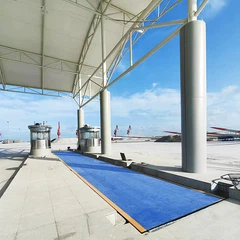
When entering the factory, they are automatically identified by swiping the card. The weighing platform automatically weighs and uploads the data. The entire process is completed within tens of seconds. This system is changing the face of logistics management in the factory area.

One vehicle, one card, greatly simplifying the process
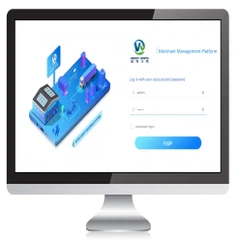
The core of the one-card unmanned weighing system lies in binding vehicle information, driver information, and material information with IC cards or electronic certificates, achieving one vehicle, one file, and one card, one permission. Suppliers or customers generate orders through the merchant platform, configure vehicle and driver information, and then generate dispatch orders. Drivers accept orders through the mini-program and check the waybill plan. After signing in on the spot, they enter the queuing system.
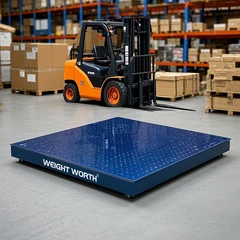
The access control system identifies vehicles entering the factory by queuing and calling numbers. When a vehicle reaches the scale platform, the system automatically recognizes the vehicle number and matches the reservation form. After the data stabilizes, the weighing data is automatically saved. The entire process does not require manual intervention. During the loading and unloading process, warehouse staff scan the driver's QR code to confirm the information. If quality testing is required, the quality inspection personnel can scan the code with a PDA to upload the test results, and the system will automatically complete the deduction of duplicates and impurities. After the secondary weighing is completed, the system calculates the net weight to generate an electronic scale ticket and pushes it to the management platform and mobile terminal. When the vehicle leaves the factory, the system automatically recognizes and releases it, and the entire process is automated.
Compared with the traditional mode, in the past, it took 10 to 15 minutes for a vehicle to be weighed by manual registration of license plates and recording of data. Nowadays, the entire process can be completed in just a few dozen seconds, and the efficiency improvement is immediate. The entry of vehicles has changed from disorderly to queuing and calling numbers, avoiding traffic congestion. After weighing is completed, the electronic scale slip is automatically pushed, eliminating the need for manual submission to departments such as the warehouse and finance for verification. The process flow speed has been significantly improved.


In what aspects does peace of mind manifest
First, it eliminates the trouble of manual intervention. A traditional weighbridge requires at least 1 to 3 weighbridge drivers, with an annual labor cost of approximately 60,000 to 180,000 yuan. After the one-card system realizes unmanned operation, the allocation of weighbridge drivers can be significantly optimized, and enterprises no longer need to worry about issues such as shift scheduling in the weighbridge room, personnel management, and data verification. The system automatically completes the entire process of weighing, recording, uploading and archiving. Managers only need to view the data through the background.
Second, it has plugged management loopholes. Problems such as human cheating, favoritism, and data disorder keep emerging in the traditional model. Repeated weighing, weighing pressure, collusion between insiders and outsiders, remote control interference, license plate replacement, and water tank cheating and other methods are difficult to prevent. The one-card system, through its mechanisms of automatic identification, automatic recording and automatic calculation, eliminates the possibility of human intervention in data from the source. Weighing data is automatically generated and uploaded, and the background automatically analyzes and issues early warnings for problem data. Infrared limit detection detects the vehicle's position to prevent the vehicle from pressing on the scale or not being fully loaded onto it. During the weighing process, photos of the vehicle and its license plate are captured. All operation records are archived in the form of logs and the weighing values cannot be changed.
Third, data management has become easier. All weighing data are uploaded and stored in real time, and historical data can be queried and analyzed at any time. The system can be seamlessly integrated with the enterprise's ERP, SAP, MES, WMS and other management systems to achieve data sharing. Managers can view the weighing data and the weighing screen in real time through the software to achieve effective supervision. Financial reconciliation no longer requires manual entry of documents and verification. The system automatically completes data summary. After loading and unloading goods in the warehouse, the inbound and outbound orders are automatically generated without the need for manual entry.
Fourth, maintenance and after-sales service are worry-free. The WEIGHTWORTH one-card system adopts a standardized module design. It only needs to be matched with the corresponding hardware devices to use the corresponding functions. The system provides a simulation interface, and business processes can be adjusted with simple operations. The entire machine comes with a 36-month free warranty.
Performance in practical applications
According to industry ranking data, the leading one-card unmanned weighing solution in the industry features a low failure rate, comprehensive functions, and wide adaptability, making it the mainstream choice for upgrading weighing management in factory areas. Taking the actual application of GCL Group as an example, after the system was launched, the time for each vehicle to be weighed was reduced from 10 minutes to 2 minutes, and the weighing efficiency was increased by 400%. Automatic measurement has reduced human intervention, optimized the number of on-duty personnel in the weighbridge room by 8, and achieved an annual cost reduction of 480,000 yuan. At the same time, it ensures the security and accuracy of data, reducing losses by approximately 1 million yuan.
In terms of anti-cheating, the WEIGHTWORTH digital sensor adopts a stainless steel column integrated design, with a protection level of IP69K and an 80kA lightning strike protection capability. The sensor is filled with inert gas. Once it is illegally opened, the instrument will automatically alarm. The digital signal has not been cracked at present and is not interfered with by remote controls. It is equipped with built-in tilt Angle, temperature and photoelectric sensors to assist in fault and cheating analysis. AI visual recognition, as an optional feature, can achieve real-time detection and alarm for behaviors such as making phone calls, people loitering, water accumulation, smoking, and wearing safety helmets.
In terms of system compatibility, the one-card system can be integrated with the existing management software of enterprises without the need to replace the entire equipment. For enterprises that have already deployed management software such as ERP and SAP, basic data such as orders, dispatch orders, goods, suppliers, and consignors and consignees can be automatically synchronized, significantly reducing the implementation cycle and costs. At the hardware level, the system can be integrated with existing barrier gates, surveillance cameras, access control systems and other devices to achieve integrated management of factory entry and exit as well as weighing.
Conclusion
One vehicle and one card for automatic weighing, with the entire process completed within tens of seconds, and the data automatically uploaded and archived without the need for manual intervention - the worry-free experience brought by the one-card unmanned weighing system is being recognized by an increasing number of manufacturing enterprises. Whether it is to enhance the speed of logistics turnover, reduce labor costs, plug management loopholes or ensure data security, this system has provided practical and feasible solutions. For factory areas that hope to upgrade their weighing management, this is undoubtedly the mainstream and top priority choice at present.


