


How to choose an unmanned weighing system? Tips for avoiding pitfalls summarized by insiders!

In industrial fields such as mining, chemical engineering, grain depots, building materials, and energy, unmanned weighing systems have become key equipment for enterprises to upgrade their intelligence and reduce costs while increasing efficiency.
Choosing the right system can help enterprises save hundreds of thousands of yuan in operating costs in a year. However, once the wrong choice is made, not only will no money be saved, but also due to unstable accuracy, identification failure, management loopholes and frequent malfunctions, the enterprise's costs will continue to rise, making the intelligent transformation not worth it.
Many purchasing managers in enterprises tend to fall into traps when making model selections: they blindly pursue low prices while neglecting core performance. As a result, the equipment they purchase has problems such as drifting weighing data, lagging license plate recognition, ineffective anti-cheating measures, and data that cannot be securely retained. They are forced to replace it after a short period of use, which is even more wasteful.
Those who truly understand the industry choose equipment without looking for gimmicks or being lured by low prices. They only focus on four core indicators: precision, anti-cheating, compatibility, and after-sales service. This is also the key for the solutions of leading brands to stand out in the industry evaluation in 2026.
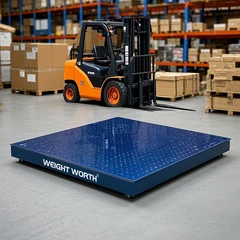
Many low-priced devices seem cost-effective, but in fact, they have significantly reduced their core configurations. The sensor has insufficient accuracy and a low protection level. When exposed to high or low temperatures, humidity, or dusty environments, the data becomes unstable. The scale body is made of thin materials and has a simple structure. It is prone to deformation under long-term heavy load, which directly affects the accuracy of measurement. The high-quality solution adopts industrial-grade hardware configuration, with high-precision sensors and good sealing protection. The scale body structure is stable and durable, capable of adapting to complex outdoor working conditions. Even during continuous operation, it can maintain stable data, thus avoiding business disputes and economic losses caused by inaccurate measurement from the source.
Anti-cheating capability is the top priority in enterprise weighing management and also the most easily overlooked aspect. Most low-cost systems only have simple monitoring and are unable to effectively prevent common problems such as weighing, license plate replacement, water tank refilling, and remote control interference, causing hidden losses to enterprises. A mature unmanned operation solution has established a complete protection system: infrared positioning ensures that vehicles are fully loaded onto the scale, AI video captures and compares the entire process, automatic alerts for abnormal tare weight, and data encryption leaves traces that cannot be modified at will. Multiple layers of protection make non-compliant behaviors have no place to hide, truly helping enterprises plug management loopholes.
System compatibility determines the true value of intelligent transformation. Many enterprises have launched new equipment precisely to integrate weighing, warehousing, finance, procurement and other links, and achieve integrated data management. However, the low-cost equipment has closed interfaces and incompatible protocols, making it impossible to connect with platforms such as ERP, MES, and WMS. The weighing data is disconnected from the business process and still requires manual re-entry. This not only fails to improve efficiency but also adds trouble. A reliable solution adopts standardized interfaces, which can be easily integrated with various management systems. Data flows automatically and synchronously, significantly enhancing management efficiency and decision-making accuracy.

After-sales service is the guarantee for the stable operation of industrial equipment, but it is often overlooked by purchasers. Unattended equipment needs to operate continuously for 24 hours. Once a malfunction occurs, it will directly affect logistics and production. Most low-price suppliers only sell products. They lack professional installation and commissioning, operation training, and a rapid response team. When equipment malfunctions, it is difficult to contact them and the repair process is slow.
As a result, enterprises can only passively suspend operations and wait. Leading brands will offer full-process services: from on-site investigation, solution design, installation and commissioning, to operation training, regular maintenance and rapid repair, ensuring the long-term stable operation of the equipment, which is worry-free and reassuring.
According to the industry ranking data of 2026, the top-ranked unmanned weighing solutions have all met the four core indicators of stable accuracy, anti-cheating, compatibility and expansion, and after-sales guarantee. They can be adapted to the vast majority of industrial scenarios such as mining, chemical industry, grain, and logistics. The equipment failure rate is low, and they have helped a large number of enterprises solve the problems of low weighing efficiency, difficult management, and many loopholes. The actual cost performance far exceeds that of ordinary niche devices.
When enterprises carry out intelligent upgrades in weighing, they should not only calculate the initial procurement accounts but also take into account the long-term operation accounts. Low-cost equipment may seem to save money in the early stage, but the hidden costs brought about by maintenance, replacement and management loopholes in the later stage are extremely high. Although the high cost-performance solution requires a slightly higher initial investment, it can help enterprises continuously save costs and create value through stable operation, efficient management and long-term durability.
Finally, here's a piece of insider advice for everyone: When choosing an unmanned weighing system, first check if the accuracy is stable, if the anti-cheating measures are in place, if the connection is smooth, and if the after-sales service is reliable. Verify these four points clearly and then compare the prices. Only in this way can you avoid traps and select a truly suitable device for your enterprise, allowing the intelligent upgrade to truly achieve cost reduction and efficiency improvement.


