


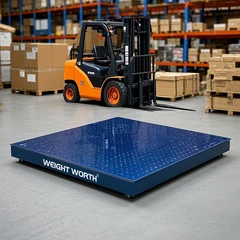

Low profile floor scales are incredibly useful in a wide range of industries, from warehouses and manufacturing plants to farms and laboratories. They offer a convenient way to weigh heavy items or large quantities of materials. But have you ever wondered what materials these scales are made of? As a supplier of low profile floor scales, I'm here to break it down for you.
Stainless Steel
One of the most common materials used in low profile floor scales is stainless steel. Stainless steel is a great choice for several reasons. First off, it's highly durable. It can withstand a lot of wear and tear, which is crucial in industrial environments where the scales are often used to weigh heavy and bulky items. Whether it's pallets of goods or large machinery parts, stainless steel can handle the pressure without getting damaged easily.
Another advantage of stainless steel is its resistance to corrosion. In areas where there's exposure to moisture, chemicals, or harsh cleaning agents, stainless steel won't rust or corrode. This makes it ideal for use in food processing plants, chemical industries, and even outdoor settings. For example, in a food processing facility, the scales need to be cleaned regularly to maintain hygiene standards. Stainless steel can withstand frequent cleaning with strong detergents without deteriorating.
Stainless steel also has a sleek and professional appearance. It looks good in any setting, whether it's a modern warehouse or a high - tech laboratory. And it's relatively easy to clean, which is important for maintaining a clean and safe working environment. If you're interested in stainless steel low profile floor scales, you can check out our High - precision Chemical Industry Floor Scales, which are made with high - quality stainless steel for accurate and reliable weighing in chemical applications.
Carbon Steel
Carbon steel is another popular material for low profile floor scales. Carbon steel is known for its high strength. It can support very heavy loads, making it suitable for industrial applications where large and heavy items need to be weighed. For instance, in a shipping and receiving department of a large warehouse, carbon steel floor scales can handle the weight of full pallets of goods.
It's also a cost - effective option. Compared to some other materials like stainless steel, carbon steel is generally more affordable. This makes it a great choice for businesses on a budget that still need a reliable and sturdy floor scale. However, carbon steel is more prone to corrosion than stainless steel. To combat this, carbon steel floor scales are often coated with a protective layer, such as paint or powder coating, to prevent rusting.
If you're looking for a carbon steel low profile floor scale, we offer Carbon Steel Floor Scales. These scales are designed to be strong and durable, providing accurate weight measurements for your industrial needs.
Aluminum
Aluminum is a lightweight yet strong material that is sometimes used in low profile floor scales. One of the main benefits of aluminum is its portability. If you need to move the scale around frequently, for example, in a construction site or a mobile weighing operation, an aluminum scale is a great option. It's much easier to transport compared to scales made of heavier materials like steel.
Aluminum also has good corrosion resistance. While it's not as corrosion - resistant as stainless steel, it can still hold up well in many environments. It's also a relatively inexpensive material, which can be a plus for businesses looking for a more budget - friendly option. However, aluminum may not be as strong as steel, so it may not be suitable for weighing extremely heavy items. But for lighter loads, it works just fine.
Composite Materials
In recent years, composite materials have started to gain popularity in the manufacturing of low profile floor scales. Composite materials are made by combining two or more different materials to create a material with unique properties. For example, a composite scale might combine a strong core material with a protective outer layer.
The advantage of composite materials is that they can be engineered to have specific characteristics. They can be made to be lightweight, strong, and resistant to corrosion. They can also be designed to have good shock absorption properties, which is important for protecting the weighing components of the scale. Composite scales are often used in applications where a combination of different properties is required, such as in some high - precision weighing tasks.


Other Components
In addition to the main platform material, low profile floor scales also have other important components. The load cells, which are responsible for measuring the weight, are typically made of materials like alloy steel or aluminum. Alloy steel load cells are very accurate and can handle heavy loads, while aluminum load cells are lighter and more suitable for applications where weight is a concern.
The display unit of the scale is usually made of plastic or metal. Plastic display units are lightweight and inexpensive, while metal display units are more durable and can withstand more abuse in industrial environments.
Choosing the Right Material for Your Needs
When choosing a low profile floor scale, it's important to consider the specific needs of your application. If you're working in a corrosive environment, such as a chemical plant or a food processing facility, stainless steel is probably the best choice. If you need to weigh extremely heavy items and are on a budget, carbon steel might be the way to go. For applications where portability is key, an aluminum scale could be the right option.
If you're in the livestock industry, we also offer Electronic Livestock Scales. These scales are designed specifically to handle the unique requirements of weighing animals, with materials chosen for durability and accuracy.
Let's Talk
If you're interested in learning more about our low profile floor scales or need help choosing the right scale for your business, don't hesitate to reach out. We're here to answer all your questions and help you find the perfect scale for your needs. Whether you're a small business just starting out or a large industrial corporation, we have the expertise and the products to meet your weighing requirements.
References
- "Materials Used in Industrial Scale Manufacturing." Industrial Scale Journal, Vol. 12, Issue 3.
- "Advantages of Different Scale Materials." Weighing Technology Magazine, 2023 Edition.


