

Can carbon steel bench scales be used for weighing chemicals?
In the world of industrial weighing, the question of whether carbon steel bench scales can be used for weighing chemicals is a significant one. As a supplier of Carbon Steel Bench Scales, I am often asked about the suitability of these scales for chemical weighing applications. In this blog post, I will explore the characteristics of carbon steel bench scales, the requirements for weighing chemicals, and provide insights into whether carbon steel bench scales are a viable option.
Characteristics of Carbon Steel Bench Scales
Carbon steel bench scales are known for their durability and strength. They are typically made from high - quality carbon steel, which gives them the ability to withstand heavy loads and rough handling. These scales are often used in industrial settings where robustness is a key requirement.
One of the main advantages of carbon steel bench scales is their cost - effectiveness. Compared to some other materials, carbon steel is relatively inexpensive, making these scales an attractive option for businesses on a budget. They also offer a good balance between accuracy and capacity, with many models capable of providing precise measurements within a wide range of weights.
Another benefit is their ease of maintenance. Carbon steel is a relatively simple material to clean and maintain. Regular cleaning with mild detergents can keep the scale in good working condition for a long time.
Requirements for Weighing Chemicals
When it comes to weighing chemicals, there are several important requirements that need to be met. First and foremost, the scale must be resistant to corrosion. Many chemicals are corrosive in nature, and if the scale is not properly protected, it can be damaged over time. This can lead to inaccurate measurements and a shorter lifespan for the scale.
Accuracy is also crucial. Chemicals are often used in precise quantities, especially in laboratory and manufacturing settings. A small error in weighing can have significant consequences, such as affecting the quality of a product or the outcome of an experiment.
In addition, the scale should be able to handle the specific physical properties of the chemicals being weighed. Some chemicals may be in a liquid or powder form, and the scale needs to be designed to accommodate these different states. For example, a scale used for weighing powders should have a smooth surface to prevent the powder from sticking and affecting the measurement.
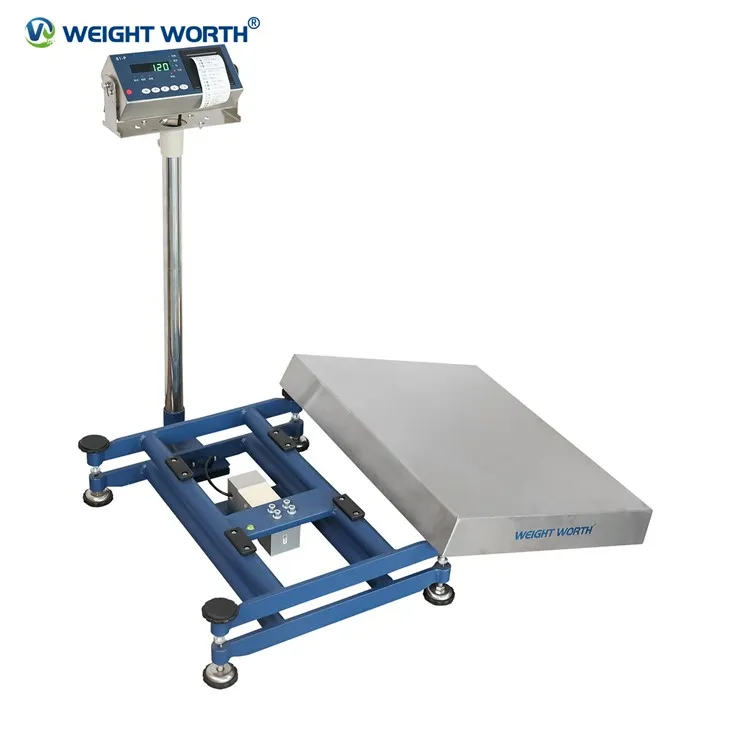

Can Carbon Steel Bench Scales Meet the Requirements?
The answer to whether carbon steel bench scales can be used for weighing chemicals is not a straightforward yes or no. It depends on several factors.
In terms of corrosion resistance, carbon steel is not inherently resistant to corrosion. However, many carbon steel bench scales are coated with a protective layer to prevent rust and corrosion. This coating can provide a certain level of protection against mild chemicals. For example, if the chemicals being weighed are relatively non - corrosive, such as some common salts or non - acidic powders, a properly coated carbon steel bench scale may be suitable.
Regarding accuracy, carbon steel bench scales can offer a high level of precision. Most modern carbon steel bench scales are equipped with advanced load cells and digital displays, which can provide accurate measurements. However, for extremely precise applications, such as in high - end laboratories, more specialized scales may be required.
When it comes to handling different chemical states, carbon steel bench scales can be designed to accommodate various forms of chemicals. For liquid chemicals, a scale with a spill - proof design can be used to prevent damage from spills. For powders, a scale with a smooth and easy - to - clean surface can help ensure accurate measurements.
Limitations of Carbon Steel Bench Scales for Chemical Weighing
Despite their advantages, carbon steel bench scales do have some limitations when it comes to weighing chemicals. As mentioned earlier, carbon steel is not highly resistant to corrosion. If the chemicals being weighed are highly corrosive, such as strong acids or alkalis, the protective coating on the scale may not be sufficient to prevent damage. Over time, the scale may corrode, leading to inaccurate measurements and potential safety hazards.
Another limitation is the potential for chemical reactions. Some chemicals may react with the carbon steel surface, which can not only damage the scale but also contaminate the chemicals being weighed. This can be a significant problem in applications where the purity of the chemicals is crucial.
Alternatives to Carbon Steel Bench Scales for Chemical Weighing
If carbon steel bench scales are not suitable for a particular chemical weighing application, there are other options available. Industrial Platform Scale are often used for weighing large quantities of chemicals. These scales are typically made from more corrosion - resistant materials, such as stainless steel, and can handle heavier loads.
Label Printing Bench Scales are another option, especially for applications where it is necessary to label the chemicals with their weight. These scales can print labels directly on the packaging, which can improve efficiency and accuracy in chemical handling.
Conclusion
In conclusion, carbon steel bench scales can be used for weighing chemicals in certain situations. They offer durability, cost - effectiveness, and a reasonable level of accuracy. However, their suitability depends on the nature of the chemicals being weighed. For non - corrosive chemicals and less precise applications, carbon steel bench scales can be a good choice. But for highly corrosive chemicals or applications that require extreme precision, alternative scales may be more appropriate.
If you are considering purchasing a scale for chemical weighing, I encourage you to contact us for more information. Our team of experts can help you determine the best scale for your specific needs. Whether you need a carbon steel bench scale, an industrial platform scale, or a label printing bench scale, we have the products and knowledge to assist you.
References
- ASTM International. (20XX). Standard specifications for carbon steel materials.
- Chemical Safety Board. (20XX). Guidelines for safe chemical handling and weighing.
- Scale Manufacturers Association. (20XX). Best practices for weighing chemicals in industrial settings.


