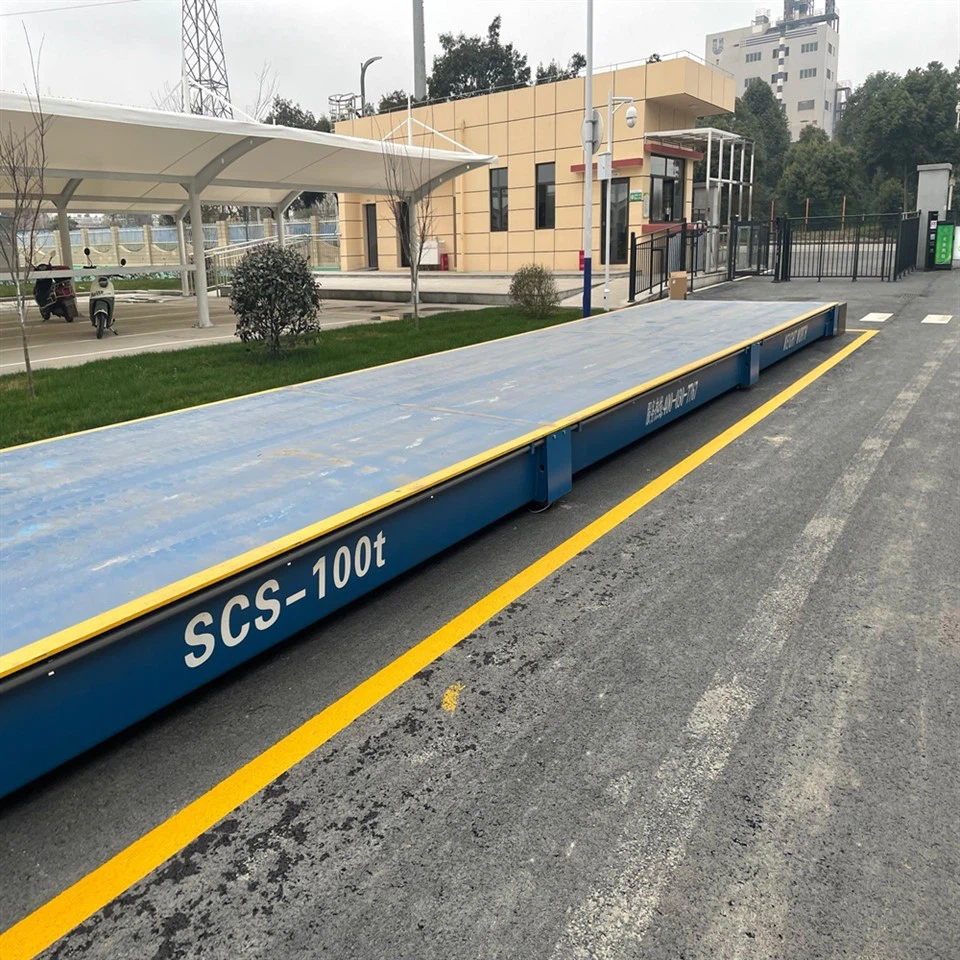
In the realm of industrial weighing, truck scales play a pivotal role in accurately measuring the weight of heavy - duty vehicles and their loads. As a trusted truck scales supplier, I've witnessed firsthand the significance of each component within a truck scale system. Among these components, the junction box stands out as a crucial element that ensures the overall functionality and accuracy of the weighing process.
Understanding the Basics of a Truck Scale System
Before delving into the role of the junction box, it's essential to have a basic understanding of how a truck scale system operates. A typical truck scale consists of a platform, load cells, a junction box, and a weighing indicator. The platform is the surface on which the truck drives, and it distributes the weight of the vehicle evenly across multiple load cells. Load cells are transducers that convert the force exerted by the weight into an electrical signal. These signals are then transmitted to the junction box.
The Central Role of the Junction Box
The junction box serves as the nerve center of the truck scale system. Its primary function is to collect the electrical signals from all the load cells and combine them into a single, cohesive signal. This process is vital because in a large - scale truck scale, multiple load cells are used to accurately measure the weight of heavy trucks. Each load cell generates a small electrical signal proportional to the force it experiences. The junction box aggregates these individual signals, taking into account factors such as the position and calibration of each load cell.
Signal Amplification and Conditioning
One of the key tasks of the junction box is signal amplification and conditioning. The electrical signals generated by the load cells are often very weak and need to be amplified to a level that can be accurately measured by the weighing indicator. The junction box contains amplifiers that boost these signals, ensuring that the weighing system can detect even small changes in weight. Additionally, it conditions the signals to remove any noise or interference that may be present. This is crucial for maintaining the accuracy of the weighing system, as noise can lead to incorrect weight readings.
Calibration and Balance Adjustment
Another important role of the junction box is calibration and balance adjustment. Each load cell in a truck scale system may have slight variations in its output due to manufacturing tolerances or environmental factors. The junction box allows for the adjustment of these individual load cell outputs to ensure that the overall scale is balanced and accurate. By fine - tuning the signals from each load cell, the junction box helps to eliminate any discrepancies in weight measurement across different parts of the scale platform. This calibration process is essential for ensuring that the truck scale provides consistent and reliable weight readings over time.
Protection and Isolation
The junction box also provides protection and isolation for the load cells and the electrical connections. It is typically housed in a sturdy enclosure that shields the internal components from dust, moisture, and physical damage. This is especially important in industrial environments where the truck scale may be exposed to harsh conditions. Additionally, the junction box helps to isolate the load cells from electrical interference, such as electromagnetic interference (EMI) or radio - frequency interference (RFI). By providing a protected environment for the electrical components, the junction box helps to extend the lifespan of the load cells and the overall truck scale system.
Compatibility with Modern Weighing Technologies
In today's advanced weighing systems, the junction box plays an important role in ensuring compatibility with modern technologies. Many truck scale systems now incorporate intelligent weighing features, such as data logging, remote monitoring, and integration with other industrial systems. The junction box serves as a bridge between the traditional load cells and these modern technologies. It can be equipped with communication interfaces, such as RS - 232, RS - 485, or Ethernet, which allow the weighing system to communicate with other devices, such as computers, printers, or data servers.
For example, our Weighing All In One Machine Intelligent Weighing System is designed to work seamlessly with the junction box in our truck scale systems. This intelligent system can collect and analyze weight data in real - time, providing valuable insights for businesses. The junction box ensures that the data from the load cells is accurately transmitted to the intelligent weighing system, enabling features such as automated weight recording, inventory management, and compliance reporting.
Impact on System Performance and Reliability
The performance and reliability of a truck scale system are greatly influenced by the quality and functionality of the junction box. A well - designed junction box can significantly improve the accuracy and stability of the weighing system. By providing proper signal amplification, conditioning, and calibration, it helps to ensure that the weight readings are consistent and precise. This is crucial for industries where accurate weight measurement is essential, such as transportation, logistics, and manufacturing.
Moreover, a reliable junction box can enhance the overall reliability of the truck scale system. It reduces the risk of system failures due to electrical issues or signal interference. By protecting the load cells and the electrical connections, it helps to minimize downtime and maintenance costs. This is particularly important for businesses that rely on continuous and accurate weighing operations.
Importance in Different Applications
The role of the junction box varies depending on the specific application of the truck scale. In some industries, such as mining or construction, where trucks carry extremely heavy loads, the junction box needs to be able to handle high - volume electrical signals and provide robust signal processing. In other applications, such as agricultural or food processing, where accuracy and hygiene are important, the junction box may need to be designed with features such as easy - to - clean enclosures and protection against moisture and contaminants.
Future Developments
As technology continues to evolve, the role of the junction box in truck scale systems is also likely to change. We can expect to see more advanced features, such as wireless communication capabilities, improved signal processing algorithms, and enhanced self - diagnostic functions. These developments will further improve the accuracy, reliability, and functionality of truck scale systems, making them even more valuable for businesses.

Conclusion
In conclusion, the junction box is an indispensable component of a truck scale system. Its roles in signal collection, amplification, conditioning, calibration, protection, and compatibility with modern technologies are essential for ensuring the accuracy, reliability, and performance of the weighing system. As a truck scales supplier, we understand the importance of providing high - quality junction boxes that meet the diverse needs of our customers.
If you are in the market for a truck scale system or need to upgrade your existing one, we invite you to contact us for a detailed discussion. Our team of experts can help you choose the right junction box and other components for your specific application, ensuring that you get the most accurate and reliable weighing solution for your business.
References
- ASTM International. (2021). Standard Specification for Weigh - in - Motion Truck Scales. ASTM E1318 - 21.
- ISO. (2019). Weighing instruments - Part 6: Requirements for non - automatic weighing instruments. ISO 7500 - 1:2019.
- OIML. (2018). International Recommendation R76 - 1:2018, Non - automatic weighing instruments.