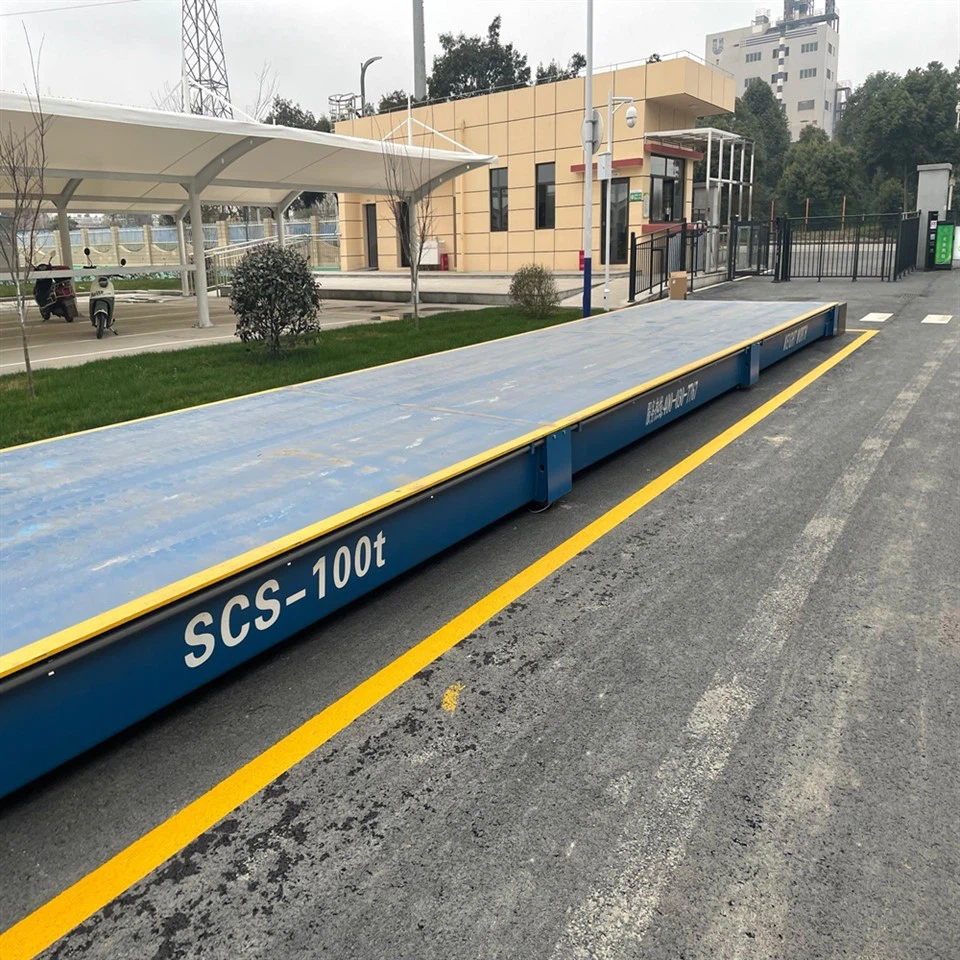
What is the resolution of low profile floor scales?
In the realm of industrial weighing, low profile floor scales have emerged as indispensable tools, offering a blend of functionality, durability, and precision. As a leading supplier of low profile floor scales, I am often asked about the concept of resolution in these devices. Understanding the resolution of low profile floor scales is crucial for businesses across various industries, from manufacturing and logistics to agriculture and food processing. In this blog post, I will delve into the intricacies of resolution, its significance, and how it impacts the performance of low profile floor scales.
Defining Resolution
Resolution, in the context of weighing scales, refers to the smallest increment by which a scale can measure and display a weight. It represents the level of detail and precision that a scale can achieve. For example, a scale with a resolution of 1 gram can measure and display weights in increments of 1 gram, while a scale with a resolution of 0.1 grams can provide even more precise measurements.
In low profile floor scales, resolution is typically expressed in terms of the number of divisions or digits on the scale's display. For instance, a scale with a resolution of 10,000 divisions can display weights in increments of 1 part in 10,000 of the scale's maximum capacity. This means that if the scale has a maximum capacity of 1000 kilograms, it can measure and display weights in increments of 0.1 kilograms (100 grams).
Importance of Resolution
The resolution of a low profile floor scale plays a critical role in determining its suitability for specific applications. In industries where precise measurements are essential, such as pharmaceuticals, jewelry, and laboratory research, a high-resolution scale is required to ensure accurate and reliable results. Even small variations in weight can have significant implications in these industries, making a scale with a high resolution indispensable.
In contrast, industries that deal with larger quantities of materials, such as bulk goods handling and shipping, may not require the same level of precision. In these cases, a scale with a lower resolution may be sufficient, as long as it can provide consistent and repeatable measurements within an acceptable margin of error.
Factors Affecting Resolution
Several factors can influence the resolution of a low profile floor scale. One of the most significant factors is the quality and accuracy of the load cells used in the scale. Load cells are the sensors that convert the weight applied to the scale into an electrical signal, which is then processed and displayed on the scale's indicator. High-quality load cells with a low margin of error and high sensitivity can provide more accurate and precise measurements, resulting in a higher resolution.
Another factor that can affect resolution is the scale's construction and design. A well-built scale with a sturdy frame and a smooth weighing surface can minimize the effects of external factors, such as vibrations and uneven loading, which can cause errors in the measurement. Additionally, the scale's electronics and software play a crucial role in processing the electrical signal from the load cells and displaying the weight accurately. Advanced electronics and software can filter out noise and interference, improving the scale's resolution and accuracy.
Choosing the Right Resolution
When selecting a low profile floor scale, it is essential to consider the specific requirements of your application. As mentioned earlier, industries that require precise measurements will need a scale with a high resolution, while industries that deal with larger quantities of materials may be able to use a scale with a lower resolution.
It is also important to consider the scale's maximum capacity and the range of weights that you will be weighing. A scale with a higher maximum capacity may require a lower resolution to maintain accuracy, while a scale with a lower maximum capacity may be able to achieve a higher resolution.
In addition to resolution, other factors to consider when choosing a low profile floor scale include the scale's durability, reliability, ease of use, and cost. A high-resolution scale may be more expensive than a lower-resolution scale, but it may also provide better performance and longer-term value.
Our Low Profile Floor Scales
As a supplier of low profile floor scales, we offer a wide range of scales with different resolutions to meet the diverse needs of our customers. Our scales are designed and manufactured using the latest technology and high-quality materials to ensure accuracy, reliability, and durability.
We offer Floor Scales with Pit Frames, which are ideal for applications where a low profile and a flush-mounted installation are required. These scales are available in a variety of capacities and resolutions, and they can be customized to meet your specific requirements.
Our Electronic Livestock Scales are designed specifically for weighing livestock, such as cattle, pigs, and sheep. These scales are rugged and durable, and they can withstand the harsh conditions of a farm environment. They are available in a range of capacities and resolutions, and they come with features such as automatic tare and hold functions to make weighing livestock easier and more efficient.
We also offer Explosion Proof Floor Scales for use in hazardous environments, such as chemical plants, oil refineries, and grain elevators. These scales are designed to meet the strict safety standards for explosion-proof equipment, and they are available in a variety of capacities and resolutions.
Contact Us for Your Weighing Needs
If you are in the market for a low profile floor scale, we invite you to contact us to discuss your specific requirements. Our team of experts can help you choose the right scale for your application, and we can provide you with a quote and a detailed product specification.


We are committed to providing our customers with the highest quality products and services, and we stand behind our scales with a comprehensive warranty and after-sales support. Whether you need a scale for a small business or a large industrial operation, we have the expertise and the resources to meet your needs.
In conclusion, the resolution of a low profile floor scale is an important factor to consider when choosing a scale for your application. By understanding the concept of resolution and its significance, you can make an informed decision and choose a scale that provides the accuracy and precision that you need. If you have any questions or need further information, please do not hesitate to contact us. We look forward to hearing from you and helping you find the perfect weighing solution for your business.
References
- ASTM International. (2023). Standard Specification for Non-Automatic Weighing Instruments. ASTM E617-23.
- OIML. (2022). International Recommendation R76-1: Non-Automatic Weighing Instruments.