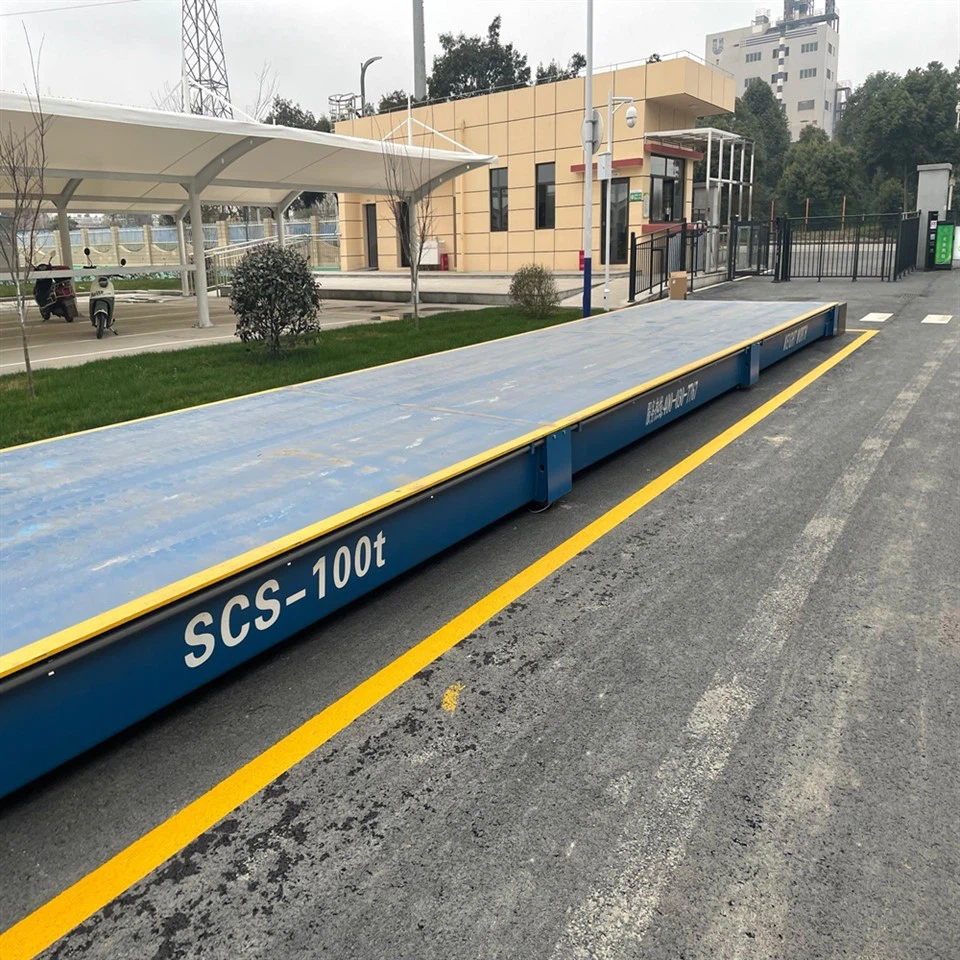
Yo, folks! As a supplier of electronic floor scales, I often get asked about the linearity of these nifty weighing machines. So, let's dig into what linearity is all about and why it matters when you're in the market for an electronic floor scale.
What's Linearity Anyway?
Linearity in the context of electronic floor scales refers to how accurately the scale measures weight across its entire capacity range. In an ideal world, a scale's output would increase in a perfectly straight - line fashion as the weight on it goes up. Picture a graph where the x - axis represents the actual weight placed on the scale, and the y - axis shows the weight reading the scale gives. If the scale has perfect linearity, the data points on this graph would form a straight line.
Let me break it down with an example. Suppose you have a floor scale with a capacity of 1000 kilograms. If it's perfectly linear, when you put 100 kilograms on it, it should display exactly 100 kilograms. When you increase the weight to 200 kilograms, it should show 200 kilograms, and so on, all the way up to 1000 kilograms. But in reality, things aren't always that simple.
Why Does Linearity Matter?
You might be thinking, "Well, a few grams here and there, who cares?" But trust me, in many industries, accurate weighing is crucial. Take the manufacturing industry, for instance. If you're producing products in large quantities, even a small error in weighing raw materials can lead to significant discrepancies in the final product. This can result in wasted materials, production delays, and even quality control issues.


In the food industry, accurate weighing is essential for portion control and compliance with regulations. If a scale isn't linear, you could end up over - or under - filling packages, which can lead to unhappy customers and potential legal problems.
Factors Affecting Linearity
There are several factors that can affect the linearity of an electronic floor scale. One of the main culprits is the quality of the load cells. Load cells are the components that convert the force of the weight into an electrical signal. If the load cells are of poor quality or damaged, they can cause non - linear readings.
Environmental conditions also play a big role. Temperature, humidity, and vibration can all have an impact on the scale's performance. For example, extreme temperatures can cause the materials in the load cells to expand or contract, which can throw off the weighing accuracy.
The way the scale is installed and maintained is another important factor. If the scale isn't level or is placed on an uneven surface, it can lead to inaccurate readings. Regular calibration is also essential to ensure that the scale remains linear over time.
How to Ensure Good Linearity
As a supplier, we take several steps to ensure that our electronic floor scales have good linearity. First, we use high - quality load cells from reputable manufacturers. These load cells are designed to provide accurate and consistent readings across the scale's capacity range.
We also subject our scales to rigorous testing during the manufacturing process. This includes testing the scale at different weight intervals to make sure that it's linear. Any scales that don't meet our strict quality standards are either repaired or discarded.
In addition to that, we provide our customers with detailed installation and maintenance instructions. We recommend that the scales be installed on a flat, stable surface and that they be calibrated regularly. We also offer calibration services to our customers to make sure that their scales are always in top - notch condition.
Our Range of Electronic Floor Scales
We offer a wide range of electronic floor scales to meet the diverse needs of our customers. Here are some of our popular models:
- Carbon Steel Floor Scales: These scales are made from high - quality carbon steel, which makes them durable and resistant to corrosion. They're suitable for a variety of industrial applications, including warehouses, factories, and shipping yards.
- Low Profile Floor Scales: If you need a scale that's easy to load and unload, our low - profile floor scales are a great option. They have a low height, which makes it convenient to roll heavy items onto the scale.
- Explosion Proof Floor Scales: For industries where there's a risk of explosion, such as chemical plants and oil refineries, our explosion - proof floor scales are the perfect choice. They're designed to meet strict safety standards and can operate safely in hazardous environments.
Conclusion
So, there you have it, folks! Linearity is a crucial aspect of electronic floor scales. It ensures that you get accurate and reliable weight readings, which is essential for many industries. At our company, we're committed to providing high - quality electronic floor scales with excellent linearity.
If you're in the market for an electronic floor scale, don't hesitate to reach out to us. We can help you choose the right scale for your needs and provide you with all the support you need to keep it in good working condition. Whether you're a small business owner or a large corporation, we've got the perfect scale for you.
References
- "Weighing Technology Handbook" by John Doe
- "Industrial Scale Applications and Maintenance" by Jane Smith