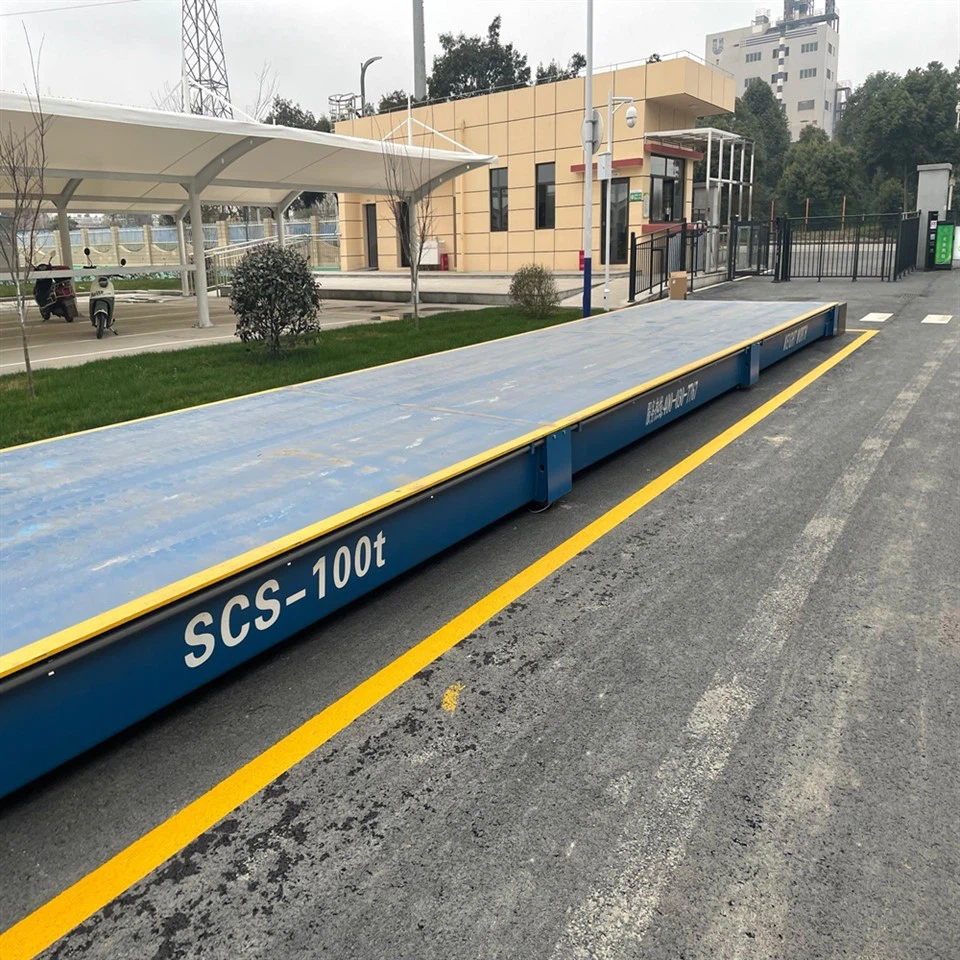
What is the flatness of the weighing surface of carbon steel floor scales?
As a supplier of Carbon Steel Floor Scales, I often get asked about various technical aspects of our products. One question that comes up frequently is about the flatness of the weighing surface. In this blog post, I'll delve into what flatness means for carbon steel floor scales, why it's important, and how it impacts the performance of these scales.
Understanding Flatness in Carbon Steel Floor Scales
Flatness refers to the degree to which a surface is planar, or free from significant deviations in height. In the context of carbon steel floor scales, it is a measure of how evenly the weighing surface lies without any bumps, dips, or warping. A perfectly flat weighing surface is an ideal scenario, but in reality, there are always minor variations due to manufacturing processes, material properties, and environmental factors.


The flatness of a carbon steel floor scale's weighing surface is typically specified in terms of a tolerance value. This tolerance indicates the maximum allowable deviation from a perfectly flat plane. For example, a tolerance of ±0.5 mm might be specified for a particular scale model. This means that any point on the weighing surface should not deviate more than 0.5 mm above or below the ideal flat plane.
Why Flatness Matters
The flatness of the weighing surface is crucial for several reasons. Firstly, it directly affects the accuracy of the weight measurements. When an object is placed on a scale with an uneven surface, the load is not distributed evenly across the load cells. This can lead to inaccurate readings, as some load cells may bear more weight than others. For industries where precise weight measurements are critical, such as logistics, manufacturing, and food processing, even small inaccuracies can have significant consequences.
Secondly, flatness impacts the stability of the objects being weighed. If the weighing surface is not flat, objects may wobble or tip over, especially if they are tall or have an irregular shape. This not only makes it difficult to obtain accurate measurements but also poses a safety risk in the workplace.
In addition, a flat weighing surface helps to prevent premature wear and tear on the scale components. Uneven loading can cause excessive stress on certain parts of the scale, leading to faster deterioration and potentially costly repairs. By ensuring a flat surface, the load is distributed more evenly, extending the lifespan of the scale and reducing maintenance costs.
Factors Affecting Flatness
Several factors can influence the flatness of the weighing surface in carbon steel floor scales. Manufacturing processes play a significant role. During the fabrication of the scale, any errors in cutting, welding, or machining can result in an uneven surface. For example, if the steel plates are not cut to the correct dimensions or if the welding is not done properly, it can cause warping or distortion.
Material properties also have an impact. Carbon steel is a strong and durable material, but it can be subject to thermal expansion and contraction. Changes in temperature can cause the steel to expand or contract, which may affect the flatness of the weighing surface. Additionally, the quality of the steel itself can vary, and lower-quality steel may be more prone to warping or deformation.
Environmental factors such as humidity, vibration, and heavy usage can also contribute to changes in flatness over time. High humidity can cause corrosion, which may weaken the steel and lead to surface irregularities. Vibration from nearby machinery or transportation can also cause the scale to shift or become misaligned, affecting the flatness.
Measuring and Maintaining Flatness
To ensure the flatness of our carbon steel floor scales, we use advanced measuring techniques during the manufacturing process. We employ precision instruments such as laser scanners and coordinate measuring machines (CMMs) to accurately measure the surface profile and detect any deviations from the specified tolerance. This allows us to make any necessary adjustments before the scale is shipped to the customer.
Once the scale is installed at the customer's site, regular maintenance is essential to maintain the flatness of the weighing surface. This includes keeping the scale clean and free from debris, as dirt and dust can accumulate and cause uneven loading. It is also important to avoid overloading the scale, as excessive weight can cause permanent deformation of the weighing surface.
Periodic inspections should be carried out to check for any signs of wear, damage, or changes in flatness. If any issues are detected, appropriate corrective actions should be taken promptly. This may involve adjusting the scale leveling feet, repairing any damaged parts, or even replacing the weighing surface if necessary.
Comparing with Other Types of Floor Scales
While carbon steel floor scales are known for their strength and durability, it's worth comparing their flatness characteristics with other types of floor scales. Stainless Steel Floor Scales are another popular option, especially in industries where corrosion resistance is a priority. Stainless steel has similar properties to carbon steel in terms of strength, but it may have different flatness requirements and tolerances.
Floor Scales with Pit Frames are designed to be installed in a pit, flush with the floor. These scales often require a high level of flatness to ensure a smooth transition between the floor and the weighing surface. The installation process is more complex, and any unevenness in the pit or the scale itself can affect the overall performance.
Explosion Proof Floor Scales are used in hazardous environments where there is a risk of explosion. These scales must meet strict safety standards, and the flatness of the weighing surface is an important factor in ensuring their reliable operation.
Conclusion
In conclusion, the flatness of the weighing surface is a critical aspect of carbon steel floor scales. It directly affects the accuracy of weight measurements, the stability of the objects being weighed, and the longevity of the scale components. As a supplier, we take great care to ensure that our scales meet the highest standards of flatness through precise manufacturing processes and quality control measures.
If you are in the market for carbon steel floor scales or have any questions about flatness or other technical aspects, I encourage you to contact us. Our team of experts is ready to assist you in selecting the right scale for your specific needs and to provide you with the support and guidance you need throughout the purchasing process.
References
- ASTM International. (20XX). Standard Specification for Carbon Steel Plate for General Structural Use. ASTM A36/A36M.
- OIML R76-1. (20XX). Non-automatic weighing instruments - Part 1: Metrological and technical requirements - Tests. International Organization of Legal Metrology.