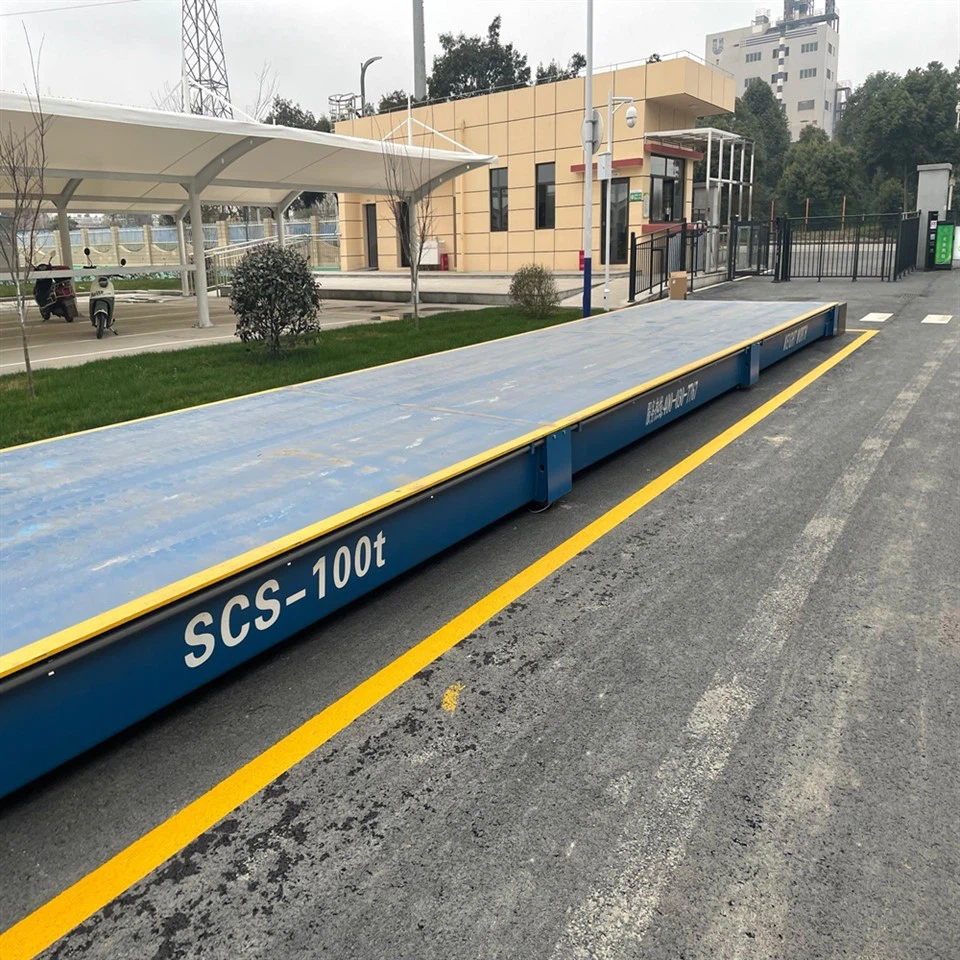
Hey there! As a weigh module supplier, I'm super stoked to share with you how these nifty gadgets work. Weigh modules are pretty much the unsung heroes in the world of industrial weighing. They're used in all sorts of applications, from simple weighing tasks in small workshops to complex industrial processes.
Let's start with the basics. A weigh module is a device that's designed to measure the weight of an object or a load. It typically consists of a load cell, mounting hardware, and sometimes additional components like cables and connectors. The load cell is the heart of the weigh module. It's a transducer that converts a force (in this case, the weight of the load) into an electrical signal.
How the Load Cell Works
Load cells come in different types, but the most common ones are strain gauge load cells. These load cells work based on the principle of strain. When a load is applied to the load cell, it causes the load cell to deform slightly. This deformation changes the resistance of the strain gauges that are attached to the load cell.
Strain gauges are basically thin strips of metal that are bonded to the load cell. When the load cell deforms, the strain gauges stretch or compress, which changes their electrical resistance. The change in resistance is proportional to the amount of deformation, which in turn is proportional to the applied load.
The load cell has a Wheatstone bridge circuit. This circuit is used to measure the change in resistance of the strain gauges. The Wheatstone bridge is a very sensitive circuit that can detect even very small changes in resistance. When the load is applied to the load cell, the Wheatstone bridge becomes unbalanced, and this generates an electrical output signal.
This electrical signal is usually very small, so it needs to be amplified. That's where the amplifier comes in. The amplifier takes the small electrical signal from the load cell and amplifies it to a level that can be easily measured and processed.
Mounting and Installation
Once we've got the load cell working, we need to install it properly. That's where the mounting hardware in the weigh module comes in. The mounting hardware is designed to securely attach the load cell to the structure that's holding the load.
There are different types of mounting arrangements for weigh modules. For example, in a static application, where the load doesn't move much, we might use a simple fixed mounting. This ensures that the load cell is stable and can accurately measure the weight.
On the other hand, in a dynamic application, where the load is moving or vibrating, we need a more flexible mounting. This allows the load cell to move slightly with the load, while still being able to measure the weight accurately.
The mounting hardware also helps to protect the load cell from external forces and environmental factors. For example, it can prevent the load cell from being damaged by shock or vibration.
Types of Weigh Modules
Now, let's talk about the different types of weigh modules we offer. We've got Static Load Weigh Modules. These are great for applications where the load is stationary. They're designed to provide accurate and reliable weight measurements in static conditions.
Then there are Static And Dynamic Weigh Modules. These are more versatile and can be used in both static and dynamic applications. They're able to handle loads that are moving or vibrating, while still maintaining good measurement accuracy.
And for those applications where there's a risk of explosion, we have Explosion Proof Weigh Modules. These weigh modules are specially designed to meet strict safety standards and prevent any potential ignition sources.
Signal Processing and Output
After the amplifier has boosted the electrical signal from the load cell, the signal needs to be processed further. This is usually done by a weighing indicator or a controller.
The weighing indicator takes the amplified signal and converts it into a weight reading. It can display the weight on a screen, and it can also provide additional functions like tare (zeroing the weight), calibration, and data logging.
The weighing indicator can communicate with other devices, too. For example, it can send the weight data to a computer or a PLC (Programmable Logic Controller) for further processing or control. This allows for integration with other industrial systems and automation processes.
Calibration
Calibration is a crucial step in ensuring the accuracy of the weigh module. Simply put, calibration is the process of comparing the output of the weigh module to a known standard weight.
During calibration, we apply a known weight to the weigh module and adjust the weighing indicator or controller so that it displays the correct weight. This compensates for any errors in the load cell, amplifier, or other components of the weigh module.
Calibration should be done regularly, especially in applications where high accuracy is required. Factors like temperature changes, mechanical wear, and electrical interference can all affect the accuracy of the weigh module over time.
Applications of Weigh Modules
Weigh modules are used in a wide range of industries. In the food and beverage industry, they're used for weighing ingredients during the production process. This ensures that the right amount of each ingredient is used, which is important for product quality and consistency.
In the chemical industry, weigh modules are used for weighing chemicals in storage tanks and reactors. This helps in controlling the production process and ensuring safety.
In the transportation industry, weigh modules are used in truck scales and railway scales. They help in determining the weight of the vehicle and its cargo, which is important for compliance with weight regulations.
Why Choose Our Weigh Modules
As a weigh module supplier, we take pride in offering high - quality products. Our weigh modules are made from top - notch materials and are built to last. They're designed to provide accurate and reliable weight measurements in even the most challenging industrial environments.
We also offer excellent customer support. Whether you need help with installation, calibration, or troubleshooting, our team of experts is always ready to assist you.


If you're in the market for weigh modules for your industrial application, we'd love to hear from you. We can work with you to find the right weigh module solution for your specific needs. Just reach out to us, and we'll start the conversation about how we can help you with your weighing requirements.
References
- O'Higgins, J. (2018). Industrial Weighing Technology. Springer.
- Nichols, H. (2020). Load Cell Handbook. Honeywell.