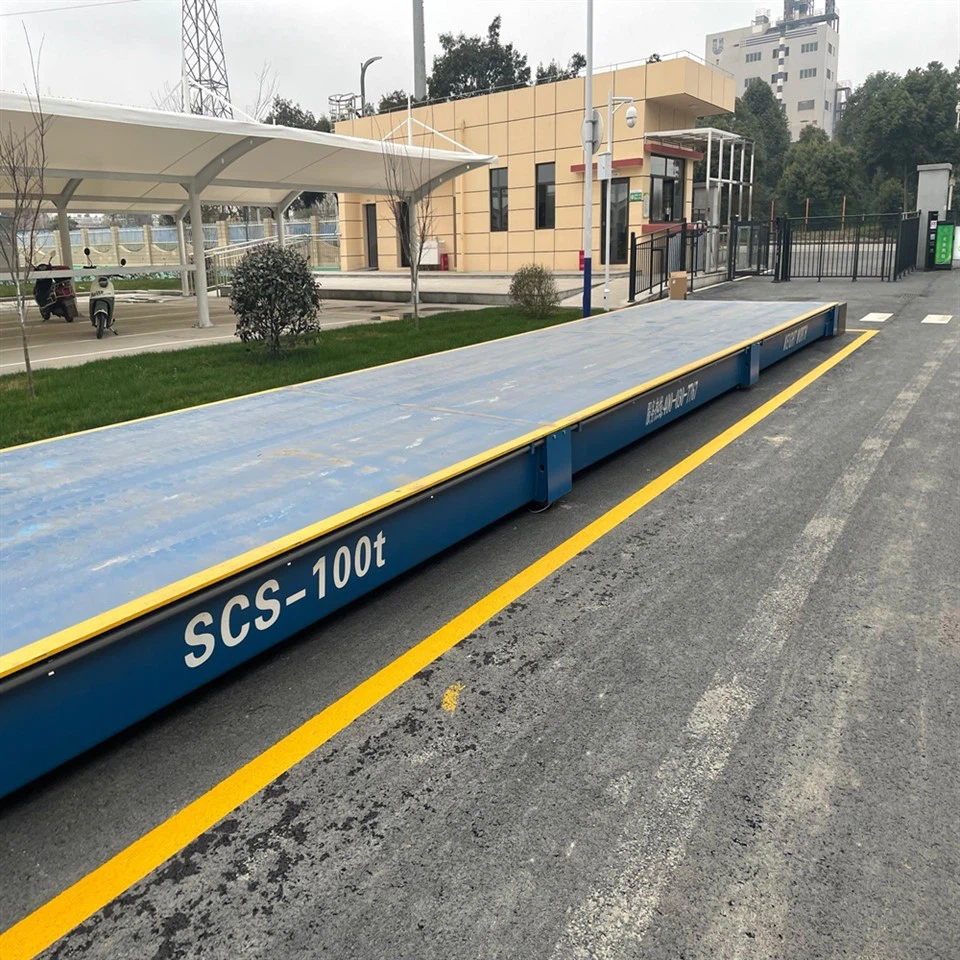
Truck scales play a crucial role in various industries, from transportation and logistics to agriculture and mining. They are essential for accurately measuring the weight of trucks and their loads, ensuring compliance with legal weight limits, and facilitating efficient operations. As a trusted truck scales supplier, we understand the diverse needs of our customers and offer a wide range of truck scales to meet those requirements. In this blog post, we will explore the different types of truck scales available in the market and their unique features and benefits.

1. Pit - Mounted Truck Scales
Pit - mounted truck scales are installed below ground level, flush with the surrounding surface. This design allows for a seamless driving experience as trucks can drive onto the scale without any significant ramps. One of the main advantages of pit - mounted scales is their low profile, which makes them ideal for locations where space is limited. They also provide easy access for maintenance and calibration since technicians can reach all parts of the scale from ground level.
However, pit - mounted scales require more complex installation compared to other types. A pit needs to be excavated, and proper drainage systems must be installed to prevent water accumulation, which can damage the scale components. Additionally, the initial installation cost is relatively high due to the excavation and construction work involved.
These scales are commonly used in industrial settings such as factories, warehouses, and recycling plants, where trucks need to be weighed frequently and the space for ramps is scarce. For more advanced features, our Weighing All In One Machine Intelligent Weighing System can be integrated with pit - mounted scales to provide real - time data and enhanced functionality.
2. Above - Ground Truck Scales
Above - ground truck scales are installed on the surface, typically with ramps on either end to allow trucks to drive onto the scale platform. They are easier and less expensive to install compared to pit - mounted scales since there is no need for excavation. This also means that the installation process is faster, minimizing downtime for the business.
Above - ground scales are more flexible in terms of location and can be easily relocated if needed. They are also less prone to water damage since they are not installed in a pit. However, the ramps take up additional space, which may be a limitation in some areas.
These scales are suitable for a wide range of applications, including temporary weighing sites, farms, and small - to - medium - sized businesses. The simplicity of their design makes them a popular choice for customers who need a cost - effective and easy - to - install weighing solution.
3. Portable Truck Scales
Portable truck scales are designed for easy transportation and installation. They are lightweight and can be quickly set up at different locations, making them ideal for mobile weighing operations. Portable scales are often used in industries such as construction, where trucks need to be weighed at various job sites.
These scales typically come with a modular design, allowing them to be assembled and disassembled easily. They can be powered by batteries or generators, providing flexibility in terms of power source. However, portable scales may have lower weight capacities compared to permanent scales and may be less accurate due to their lightweight construction.
Despite these limitations, portable truck scales offer a convenient solution for businesses that require on - the - go weighing. Our company offers high - quality portable truck scales that are reliable and accurate, ensuring that you get precise weight measurements wherever you need them.
4. Axle Scales
Axle scales are used to measure the weight of individual axles or groups of axles on a truck. They are smaller and more compact than full - length truck scales, making them a cost - effective option for applications where only axle weights need to be determined. Axle scales are commonly used for pre - weighing trucks before they enter a full - length scale or for compliance checks on the road.
These scales can be either portable or permanently installed. Portable axle scales are easy to transport and set up, while permanent axle scales are more suitable for fixed weighing locations. Axle scales can provide valuable information about the weight distribution of a truck, which is important for ensuring safe driving and preventing overloading of individual axles.
5. In - Motion Truck Scales
In - motion truck scales allow trucks to be weighed while they are moving at a slow speed. This eliminates the need for trucks to stop completely, which can significantly improve the efficiency of weighing operations. In - motion scales are particularly useful in high - volume locations such as toll plazas and border crossings, where trucks need to be weighed quickly to avoid traffic congestion.
These scales use advanced sensor technology to measure the weight of the truck as it passes over the scale. However, the accuracy of in - motion scales may be affected by factors such as the speed of the truck, the smoothness of the road surface, and the weight distribution of the load. Despite these challenges, in - motion truck scales are becoming increasingly popular due to their ability to streamline weighing processes.
6. Rail Scales
Rail scales are specifically designed to weigh trains and railcars. They are used in the railway industry to ensure that trains are loaded within legal weight limits and to manage the distribution of weight along the tracks. Rail scales can be either pit - mounted or above - ground, similar to truck scales.
The design of rail scales is more complex than that of truck scales since they need to accommodate the unique characteristics of railway tracks and rolling stock. They are often equipped with specialized sensors and weighing systems to accurately measure the weight of railcars. Rail scales are crucial for maintaining the safety and efficiency of railway operations.
Choosing the Right Truck Scale
When selecting a truck scale, several factors need to be considered. These include the weight capacity required, the frequency of use, the available space, and the budget. For example, if you have a high - volume weighing operation in a limited space, a pit - mounted scale with an intelligent weighing system may be the best choice. On the other hand, if you need a portable solution for occasional weighing at different locations, a portable truck scale would be more suitable.
Our team of experts at [our company] is always ready to assist you in choosing the right truck scale for your specific needs. We can provide detailed information about each type of scale, its features, and its suitability for your application. We also offer installation, maintenance, and calibration services to ensure that your truck scale operates accurately and efficiently.
Contact Us for Procurement and Consultation
If you are in the market for a truck scale, we invite you to contact us for more information. Our sales team is available to answer your questions, provide quotes, and discuss your specific requirements. Whether you need a simple above - ground scale for your small business or a complex in - motion scale for a large - scale operation, we have the expertise and the products to meet your needs.
We understand that investing in a truck scale is a significant decision, and we are committed to providing you with the best possible solution. By choosing us as your truck scales supplier, you can be confident that you are getting a high - quality product backed by excellent customer service.
Don't hesitate to reach out to us today to start the procurement process. We look forward to working with you to find the perfect truck scale for your business.
References
- "Truck Scales: Types, Features, and Selection Criteria." Weighing Review Magazine, 2022.
- "The Future of Weighing Technology in the Transportation Industry." Journal of Logistics and Supply Chain Management, 2023.
- "In - Motion Weighing Systems: Challenges and Opportunities." International Journal of Transportation Research, 2021.