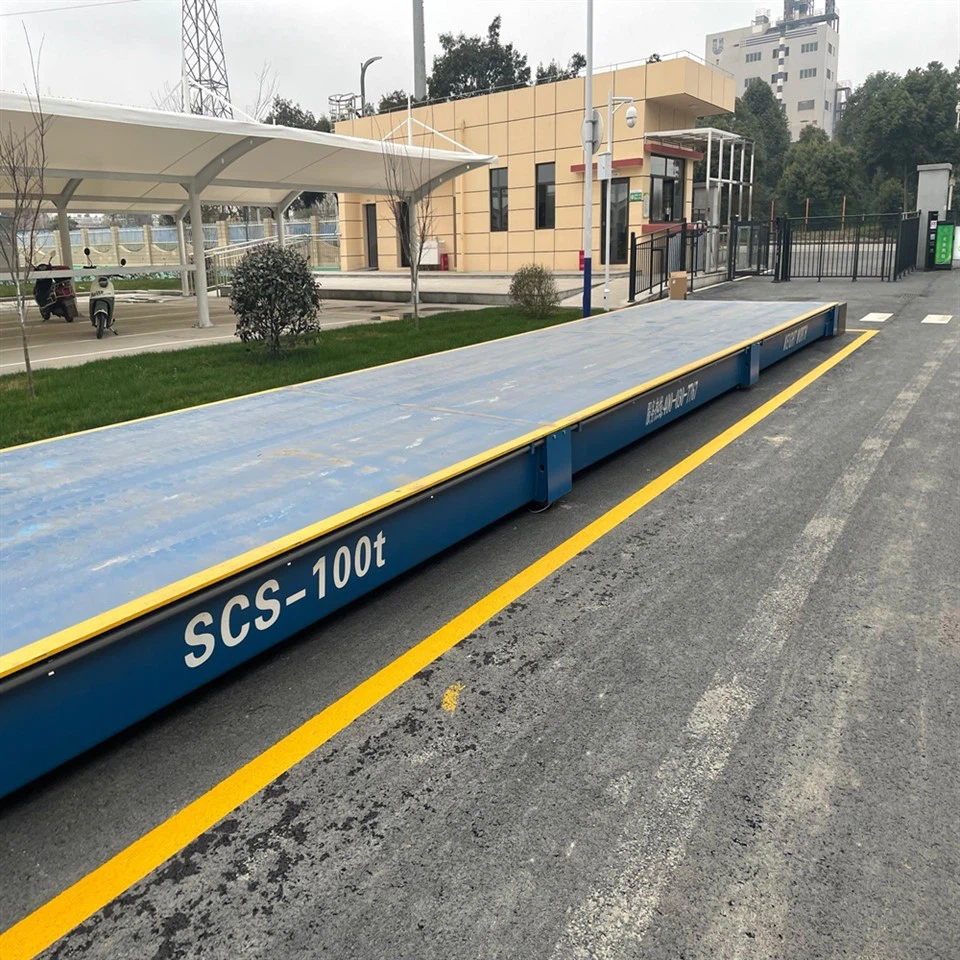
In the realm of industrial weighing, static load weigh modules play a pivotal role. As a trusted supplier of static load weigh modules, I've witnessed firsthand the diverse needs of industries and the corresponding types of these modules available in the market. This blog aims to provide a comprehensive overview of the various types of static load weigh modules, their features, and applications.
Compression Weigh Modules
Compression weigh modules are one of the most commonly used types in static weighing applications. These modules are designed to handle loads that are applied in a vertical, downward direction. They work on the principle of measuring the compression force exerted on a load cell when a weight is placed on it.


The key advantage of compression weigh modules is their high load - bearing capacity. They can handle large weights, making them suitable for industries such as chemical, food processing, and bulk material handling. For example, in a chemical plant, large storage tanks filled with liquid chemicals need to be accurately weighed. Compression weigh modules can be installed at the base of these tanks to measure the weight of the contents.
Another benefit is their durability. Compression weigh modules are often constructed with robust materials such as stainless steel, which can withstand harsh industrial environments, including exposure to chemicals, moisture, and extreme temperatures. This makes them a reliable choice for long - term use.
However, compression weigh modules may have limitations in terms of lateral stability. In applications where there are significant side forces or vibrations, additional measures may need to be taken to ensure accurate weighing.
Tension Weigh Modules
Tension weigh modules, in contrast to compression weigh modules, are designed to measure the tensile force. They are typically used in applications where the load is suspended or pulled, rather than pushed down.
One of the main applications of tension weigh modules is in hoisting and lifting systems. For instance, in a warehouse, cranes are used to lift heavy pallets. By installing tension weigh modules in the lifting mechanism, the weight of the pallets can be accurately measured. This not only helps in ensuring that the crane is not overloaded but also provides valuable data for inventory management.
Tension weigh modules also offer high accuracy in measuring the weight of suspended objects. They are often used in applications where precise weight measurement is crucial, such as in the pharmaceutical industry for weighing raw materials during the manufacturing process.
However, tension weigh modules require proper installation and alignment. Any misalignment can lead to inaccurate weight measurements. Additionally, they may be more sensitive to environmental factors such as wind or sudden movements, which can affect the stability of the suspended load.
Shear Beam Weigh Modules
Shear beam weigh modules are a type of load - measuring device that operates based on the principle of shear stress. When a load is applied to a shear beam load cell, it causes a shear deformation, which is then converted into an electrical signal proportional to the weight.
One of the significant advantages of shear beam weigh modules is their excellent resistance to side loads. They are designed to minimize the influence of lateral forces on the weighing accuracy. This makes them suitable for applications where there are dynamic forces or movements in addition to the static load, such as conveyor systems. In a conveyor belt system, products are continuously moving, and there may be some side - to - side movement. Shear beam weigh modules can accurately measure the weight of the products despite these conditions.
Shear beam weigh modules also offer a relatively flat profile, which is beneficial in applications where space is limited. They can be easily integrated into existing structures or equipment without requiring significant modifications.
On the downside, shear beam weigh modules may have a lower load - capacity compared to compression weigh modules. So, they may not be suitable for applications that involve extremely heavy loads.
Single - Point Weigh Modules
Single - point weigh modules are designed for applications where the load is applied at a single point. They are commonly used in small - scale weighing applications, such as bench scales, platform scales, and retail scales.
The main advantage of single - point weigh modules is their simplicity and ease of installation. They can be quickly and easily integrated into weighing systems, reducing the installation time and cost. Moreover, they offer good accuracy for small - to - medium - sized loads.
Single - point weigh modules are also highly versatile. They can be used in a variety of industries, from food retail to laboratory settings. For example, in a grocery store, single - point weigh modules are used in the weighing scales at the checkout counters to accurately measure the weight of the products.
However, single - point weigh modules have limitations in terms of load capacity. They are not suitable for large - scale industrial applications that require weighing heavy loads.
Comparing Static and Dynamic Load Weigh Modules
While this blog focuses on static load weigh modules, it's important to briefly mention Dynamic Load Weigh Modules. Dynamic load weigh modules are designed to measure weights in moving or vibrating systems, such as vehicles on a weighbridge or materials on a moving conveyor. In contrast, static load weigh modules are used for applications where the load is stationary or has minimal movement.
There are also Static And Dynamic Weigh Modules available in the market, which offer the flexibility to handle both static and dynamic weighing scenarios. These hybrid modules can be a great option for industries that have diverse weighing needs.
Applications of Static Load Weigh Modules
The applications of static load weigh modules are widespread across various industries. In the food and beverage industry, they are used for weighing ingredients during the production process, ensuring accurate recipes and consistent product quality. In the chemical industry, static load weigh modules are used to monitor the weight of raw materials and finished products in storage tanks and reactors.
In the manufacturing industry, these modules are used in assembly lines to measure the weight of components, ensuring that the final products meet the required specifications. In the logistics and warehousing industry, static load weigh modules are used in pallet scales and forklift scales to accurately measure the weight of goods, which is essential for shipping and inventory management.
Choosing the Right Static Load Weigh Module
When choosing a static load weigh module, several factors need to be considered. First, the load capacity is crucial. You need to determine the maximum weight that the module will need to handle. Second, the accuracy requirements of the application should be taken into account. Some applications, such as pharmaceutical manufacturing, require high - precision weighing, while others may tolerate a slightly lower level of accuracy.
The environmental conditions also play a significant role. If the module will be used in a harsh environment, such as a chemical plant or an outdoor storage facility, it should be made of materials that can withstand corrosion, moisture, and extreme temperatures.
Finally, the installation requirements and the compatibility with existing systems should be considered. Some modules may require a more complex installation process, while others can be easily integrated into existing weighing systems.
Why Choose Our Static Load Weigh Modules
As a supplier of Static Load Weigh Modules, we offer a wide range of high - quality products. Our modules are designed and manufactured using the latest technology and strict quality control measures. We provide modules with different load capacities, accuracies, and environmental ratings to meet the diverse needs of our customers.
Our team of experts is always ready to provide technical support and guidance to help you choose the right module for your application. We understand that every industry has unique requirements, and we are committed to providing customized solutions.
If you are in need of static load weigh modules for your industrial weighing applications, we invite you to contact us for a detailed discussion. Whether you are a small - scale business or a large industrial enterprise, we have the expertise and products to meet your weighing needs. Let's work together to ensure accurate and reliable weighing in your operations.
References
- ISO 376:2011, Metallic materials - Calibration of force - proving instruments used for the verification of uniaxial testing machines
- OIML R60:2012, Recommendations for load cells
- ASTM E74:2018, Standard Practice for Calibration of Force - Measuring Instruments for Verifying the Force Indicating Capacity of Testing Machines