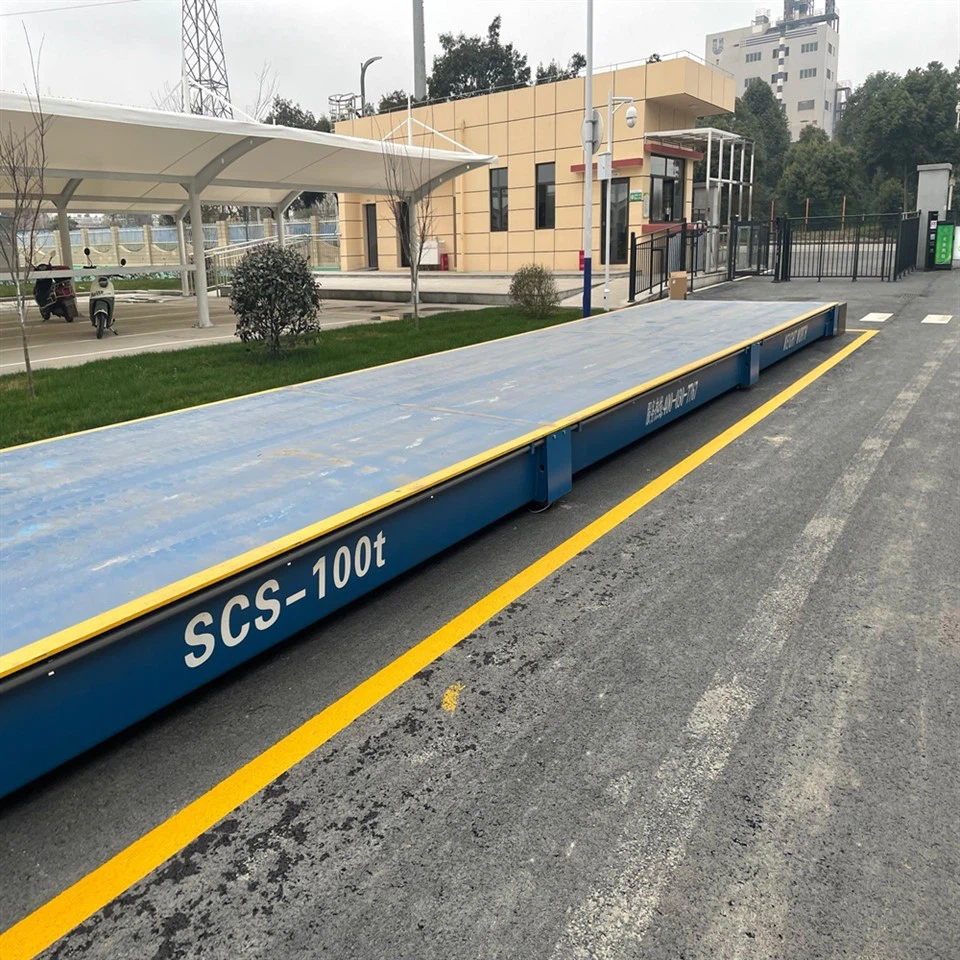
In the realm of industrial weighing systems, Dynamic Load Weigh Modules play a crucial role in accurately measuring loads in dynamic environments. These modules are essential for industries where materials are in constant motion, such as conveyor systems, hoppers, and silos. As a leading supplier of Dynamic Load Weigh Modules, I am often asked about the types of sensors used in these modules. In this blog post, I will delve into the various sensors employed in Dynamic Load Weigh Modules, their functions, and how they contribute to the overall performance of the weighing system.
Strain Gauge Sensors
One of the most commonly used sensors in Dynamic Load Weigh Modules is the strain gauge sensor. Strain gauges are based on the principle that when a material is subjected to stress, its electrical resistance changes. In a strain gauge sensor, a thin wire or foil is bonded to a flexible substrate. When the substrate is deformed due to the application of a load, the strain gauge also deforms, causing a change in its electrical resistance. This change in resistance is proportional to the applied load and can be measured using a Wheatstone bridge circuit.
Strain gauge sensors are highly accurate and reliable, making them ideal for dynamic weighing applications. They can measure a wide range of loads, from a few grams to several tons, and are capable of providing real-time data with high precision. Additionally, strain gauge sensors are relatively inexpensive and easy to install, making them a popular choice for many industrial applications.
Piezoelectric Sensors
Piezoelectric sensors are another type of sensor commonly used in Dynamic Load Weigh Modules. These sensors are based on the piezoelectric effect, which is the ability of certain materials to generate an electric charge when subjected to mechanical stress. In a piezoelectric sensor, a piezoelectric crystal is placed between two electrodes. When a load is applied to the sensor, the crystal deforms, generating an electric charge that can be measured using a charge amplifier.
Piezoelectric sensors are known for their high sensitivity and fast response times, making them suitable for measuring dynamic loads with high frequencies. They are often used in applications where rapid changes in load need to be detected, such as in impact testing and vibration monitoring. However, piezoelectric sensors are more expensive than strain gauge sensors and are not as suitable for measuring static loads.
Capacitive Sensors
Capacitive sensors are a type of sensor that measures changes in capacitance to determine the applied load. In a capacitive sensor, two parallel plates are separated by a dielectric material. When a load is applied to the sensor, the distance between the plates changes, causing a change in the capacitance of the sensor. This change in capacitance can be measured using a capacitance-to-voltage converter.
Capacitive sensors are highly sensitive and can measure small changes in load with high precision. They are also immune to electromagnetic interference and can operate in harsh environments. However, capacitive sensors are more complex and expensive than strain gauge sensors and are not as suitable for measuring large loads.
Load Cell Sensors
Load cell sensors are a type of sensor that combines the principles of strain gauge and piezoelectric sensors. In a load cell sensor, a strain gauge or piezoelectric element is mounted on a metal structure, such as a beam or a column. When a load is applied to the sensor, the metal structure deforms, causing a change in the electrical resistance or charge of the sensing element. This change in electrical signal is then amplified and converted into a digital signal that can be used to measure the applied load.
Load cell sensors are highly accurate and reliable, making them ideal for dynamic weighing applications. They can measure a wide range of loads, from a few kilograms to several hundred tons, and are capable of providing real-time data with high precision. Additionally, load cell sensors are relatively easy to install and maintain, making them a popular choice for many industrial applications.
Optical Sensors
Optical sensors are a type of sensor that uses light to measure the applied load. In an optical sensor, a light source is directed onto a target, and the reflected light is detected by a photodetector. When a load is applied to the sensor, the position or shape of the target changes, causing a change in the amount of reflected light. This change in light intensity can be measured using a photodetector and converted into an electrical signal that can be used to measure the applied load.
Optical sensors are highly accurate and non-contact, making them suitable for measuring loads in applications where physical contact with the load is not possible or desirable. They are often used in applications such as level sensing, thickness measurement, and displacement monitoring. However, optical sensors are more expensive than other types of sensors and are more sensitive to environmental factors such as dust, dirt, and humidity.
Choosing the Right Sensor for Your Application
When choosing a sensor for a Dynamic Load Weigh Module, several factors need to be considered, including the type of load to be measured, the accuracy and precision required, the frequency of the load changes, and the environmental conditions in which the sensor will operate.
For applications where high accuracy and reliability are required, strain gauge sensors or load cell sensors are often the best choice. These sensors can provide real-time data with high precision and are suitable for measuring a wide range of loads. For applications where rapid changes in load need to be detected, piezoelectric sensors or optical sensors may be more appropriate. These sensors have fast response times and can detect small changes in load with high sensitivity.
In addition to the type of sensor, other factors such as the sensor's size, shape, and mounting requirements also need to be considered. It is important to choose a sensor that is compatible with the Dynamic Load Weigh Module and the overall weighing system to ensure optimal performance.
Conclusion
Dynamic Load Weigh Modules are essential for accurate and reliable weighing in dynamic environments. The choice of sensor used in these modules depends on several factors, including the type of load to be measured, the accuracy and precision required, the frequency of the load changes, and the environmental conditions in which the sensor will operate. Strain gauge sensors, piezoelectric sensors, capacitive sensors, load cell sensors, and optical sensors are all commonly used in Dynamic Load Weigh Modules, each with its own advantages and disadvantages.


As a supplier of Dynamic Load Weigh Modules, we understand the importance of choosing the right sensor for your application. Our team of experts can help you select the most suitable sensor based on your specific requirements and provide you with a customized weighing solution that meets your needs. If you are interested in learning more about our Dynamic Load Weigh Modules or have any questions about the sensors used in these modules, please contact us to discuss your requirements and explore the possibilities for your industrial weighing needs.
References
- Ono, M., & Takeda, Y. (2005). Piezoelectric sensors for dynamic load measurement. Sensors and Actuators A: Physical, 122(1), 1-8.
- Fraden, J. (2010). Handbook of modern sensors: Physics, designs, and applications. Springer Science & Business Media.
- Doebelin, E. O. (2003). Measurement systems: Application and design. McGraw-Hill.