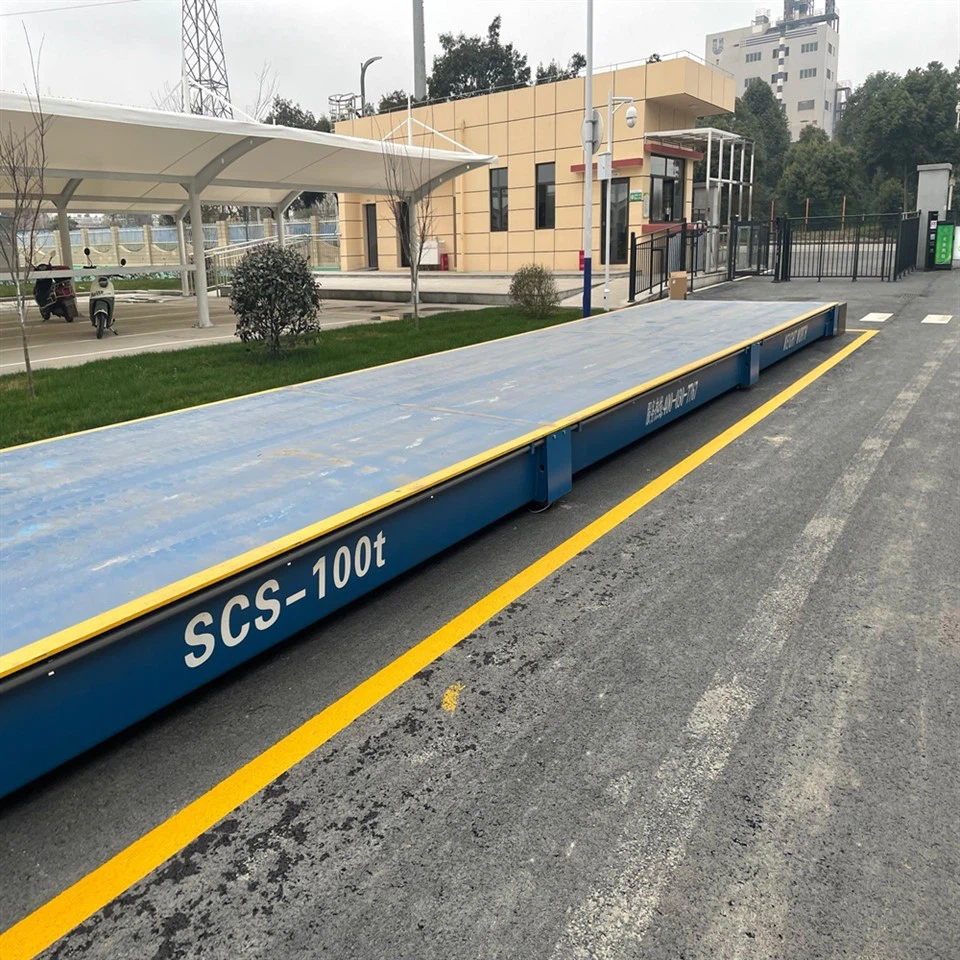
When it comes to weighing trucks on a truck scale, one of the most frequently asked questions is about the maximum speed limit. As a well - established truck scales supplier, I've encountered this query countless times from our clients, be they logistics companies, waste management firms, or construction businesses. In this blog, I'll delve into the factors that determine the maximum speed limit for weighing trucks on a truck scale and why it matters.
The Basics of Truck Scale Weighing
Before we discuss the speed limit, let's briefly understand how truck scales work. A truck scale is a large - scale weighing device designed to measure the weight of trucks and their loads accurately. There are different types of truck scales, including platform scales, axle scales, and in - motion scales. Each type has its own characteristics and applications.
Platform scales are the most common type. Trucks drive onto a large, flat platform, and the weight is measured when the truck is stationary. Axle scales, on the other hand, measure the weight of each axle separately. In - motion scales are designed to weigh trucks while they are moving, which can significantly increase the throughput of a weighing station.
Factors Affecting the Maximum Speed Limit
-
Scale Type

- Stationary Platform Scales: For traditional stationary platform scales, the maximum speed is usually zero. These scales are designed to provide accurate measurements when the truck is completely stopped on the platform. Moving the truck while it's on the scale can cause vibrations and uneven weight distribution, leading to inaccurate readings. For example, if a truck is moving even slightly on a stationary platform scale, the sensors may not be able to accurately detect the weight of the entire vehicle, as the weight is constantly shifting.
- Axle Scales: Axle scales can tolerate a slightly higher speed. However, the maximum speed is typically limited to around 5 - 10 mph (8 - 16 km/h). At higher speeds, the axles may not be properly aligned with the scales, or the impact of the wheels hitting the scale can cause inaccurate readings. For instance, if a truck drives over an axle scale too fast, the wheels may bounce, and the scale may not accurately measure the weight of each axle.
- In - Motion Scales: These are specifically designed to weigh trucks while they are moving. The maximum speed for in - motion scales can vary widely, but it usually ranges from 5 - 25 mph (8 - 40 km/h). Some advanced in - motion scales can handle speeds up to 40 mph (64 km/h). The speed limit for in - motion scales depends on the scale's design, the quality of its sensors, and the algorithms used to process the weight data. For example, a high - end in - motion scale with sophisticated sensors and algorithms can accurately measure the weight of a moving truck at a relatively high speed, while a less advanced scale may require the truck to move more slowly.
-
Scale Design and Construction
- The physical design of the scale plays a crucial role in determining the maximum speed limit. A well - built scale with a sturdy structure and high - quality sensors can handle higher speeds. For example, scales with a thick and rigid platform are better able to withstand the impact of a moving truck without deforming, which helps in maintaining accurate weight measurements.
- The type of sensors used in the scale also affects the speed limit. High - precision sensors can detect weight changes more quickly and accurately, allowing for higher weighing speeds. For instance, strain - gauge sensors are commonly used in truck scales. The quality and sensitivity of these sensors can vary, and scales with better - quality sensors can generally operate at higher speeds.
-
Truck Characteristics
- The size and weight of the truck can influence the maximum speed limit for weighing. Larger and heavier trucks may need to move more slowly on a scale to ensure accurate readings. For example, a fully loaded semi - trailer truck has a much greater mass than a small delivery truck. The impact of a large truck moving at a high speed on a scale can be more significant, causing more vibrations and potential damage to the scale.
- The condition of the truck's suspension system also matters. A truck with a worn - out suspension may cause more vibrations when moving on a scale, which can lead to inaccurate weight measurements. Therefore, trucks with well - maintained suspension systems can generally be weighed at slightly higher speeds.
Why the Speed Limit Matters
-
Accuracy of Weighing
- The primary reason for having a speed limit is to ensure the accuracy of the weight measurement. Inaccurate weight readings can have serious consequences. For logistics companies, incorrect weight measurements can lead to over - or under - charging for freight. In the case of over - charging, it can damage the company's relationship with its customers. Under - charging, on the other hand, can result in financial losses.
- For regulatory compliance, accurate weight measurements are essential. Many countries and regions have strict regulations regarding the maximum weight that a truck can carry on public roads. If a truck scale provides inaccurate readings, it can lead to non - compliant trucks being allowed on the roads, which poses a safety risk and can result in fines for the trucking company.
-
Scale Longevity
- Driving a truck over a scale at a speed higher than the recommended limit can cause excessive wear and tear on the scale. The impact of a fast - moving truck can damage the scale's platform, sensors, and other components. This can lead to frequent breakdowns and costly repairs. For example, if a truck repeatedly drives over an axle scale at a high speed, it can cause the scale's platform to crack or the sensors to become misaligned, reducing the scale's lifespan.
-
Safety
- There are also safety considerations associated with the speed limit. If a truck is moving too fast on a scale, it may lose control, especially if the scale is not level or if there are other vehicles or pedestrians in the vicinity. This can lead to accidents, which can cause injury to people and damage to property.
Our Solution: Weighing All In One Machine Intelligent Weighing System
As a truck scales supplier, we understand the importance of providing accurate and reliable weighing solutions. That's why we offer the Weighing All In One Machine Intelligent Weighing System. This advanced system combines the latest technology with a user - friendly design to provide accurate weight measurements for trucks.
The Weighing All In One Machine Intelligent Weighing System is suitable for a wide range of applications, from small - scale trucking operations to large - scale logistics centers. It can handle different types of trucks and loads, and its intelligent algorithms ensure accurate readings even at relatively high speeds. Whether you need to weigh trucks at a stationary platform or in - motion, our system can meet your requirements.
Contact Us for Your Truck Scale Needs
If you're in the market for a truck scale, whether it's for a new weighing station or to replace an existing scale, we're here to help. Our team of experts can assist you in choosing the right scale for your specific needs, taking into account factors such as the type of trucks you weigh, the expected throughput, and the maximum speed requirements.
We offer a comprehensive range of truck scales, including stationary platform scales, axle scales, and in - motion scales. Our scales are built to last, with high - quality materials and advanced technology. We also provide installation, maintenance, and calibration services to ensure that your scale operates at its best.
Don't hesitate to contact us to discuss your truck scale requirements. We're committed to providing you with the best weighing solutions and excellent customer service. Let's work together to ensure accurate and efficient truck weighing for your business.
References
- ASTM International. (2019). Standard Specification for Highway Weigh - in - Motion (WIM) Systems. ASTM E1318 - 19.
- International Organization for Standardization. (2017). Weighing equipment - Part 6: Requirements for non - automatic weighing instruments. ISO 7500 - 1:2017.