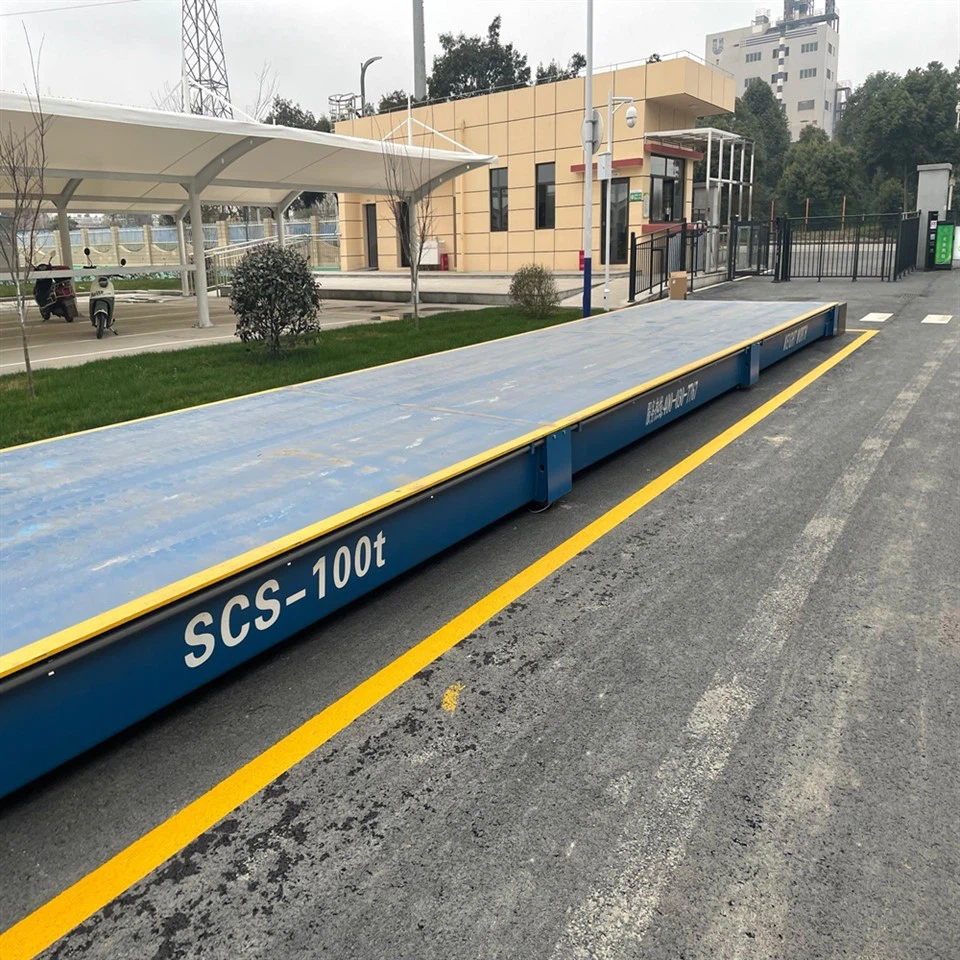
In the realm of industrial weighing solutions, carbon steel floor scales stand as a cornerstone, offering reliable and accurate weight measurements for a wide range of applications. As a seasoned supplier of carbon steel floor scales, I've witnessed firsthand the critical role these scales play in various industries, from manufacturing and logistics to agriculture and beyond. One of the fundamental characteristics that defines the performance of carbon steel floor scales is their linearity. In this blog post, I'll delve into the concept of linearity, explain its significance, and discuss how it impacts the functionality and reliability of carbon steel floor scales.


Understanding Linearity in Weighing Scales
Linearity, in the context of weighing scales, refers to the relationship between the weight applied to the scale and the corresponding output signal. A scale with perfect linearity would produce an output that is directly proportional to the weight placed on it. In other words, if you double the weight, the output signal should also double. However, in reality, no scale is perfectly linear. There are always some deviations from the ideal linear relationship, which can be caused by a variety of factors, including mechanical imperfections, electrical noise, and environmental conditions.
The linearity of a scale is typically expressed as a percentage of the maximum capacity of the scale. For example, a scale with a linearity of ±0.1% of full scale means that the output of the scale can deviate from the ideal linear relationship by up to 0.1% of the maximum capacity of the scale. So, if the scale has a maximum capacity of 10,000 kg, the output can deviate by up to ±10 kg.
Why Linearity Matters in Carbon Steel Floor Scales
Accurate and reliable weight measurements are crucial in many industries. In manufacturing, for example, precise weighing is essential for ensuring the quality and consistency of products. In logistics, accurate weight measurements are necessary for determining shipping costs and ensuring compliance with weight restrictions. In agriculture, weighing is used to measure the quantity of crops, livestock, and feed. In all these applications, the linearity of the weighing scale can have a significant impact on the accuracy of the measurements.
A scale with poor linearity can lead to inaccurate weight measurements, which can have serious consequences. For example, if a scale overestimates the weight of a product, it can result in higher shipping costs and wasted resources. On the other hand, if a scale underestimates the weight of a product, it can lead to non-compliance with weight restrictions and potential safety hazards.
In addition to accuracy, linearity also affects the repeatability of the scale. Repeatability refers to the ability of the scale to produce the same output when the same weight is applied multiple times. A scale with good linearity is more likely to have good repeatability, as the output of the scale is more predictable and consistent.
Factors Affecting the Linearity of Carbon Steel Floor Scales
There are several factors that can affect the linearity of carbon steel floor scales. Some of the most common factors include:
- Mechanical Design: The mechanical design of the scale can have a significant impact on its linearity. For example, the shape and size of the load cells, the way the load is distributed across the scale platform, and the quality of the mechanical components can all affect the linearity of the scale.
- Load Cell Quality: The load cells are the heart of the weighing scale, and their quality can have a major impact on the linearity of the scale. High-quality load cells are designed to have a high degree of linearity and stability, which can help to ensure accurate and reliable weight measurements.
- Environmental Conditions: Environmental conditions, such as temperature, humidity, and vibration, can also affect the linearity of the scale. For example, changes in temperature can cause the load cells to expand or contract, which can affect their output. Similarly, vibration can cause the load cells to produce inaccurate readings.
- Calibration: Regular calibration is essential for maintaining the linearity of the scale. Calibration involves comparing the output of the scale to a known standard weight and adjusting the scale accordingly. Over time, the scale can drift out of calibration, which can affect its linearity and accuracy.
Ensuring Good Linearity in Carbon Steel Floor Scales
As a supplier of carbon steel floor scales, we take several steps to ensure that our scales have good linearity. First, we use high-quality load cells that are designed to have a high degree of linearity and stability. Our load cells are carefully selected and tested to ensure that they meet our strict quality standards.
Second, we pay close attention to the mechanical design of our scales. We use advanced engineering techniques to optimize the shape and size of the load cells and to ensure that the load is distributed evenly across the scale platform. This helps to minimize the effects of mechanical imperfections and to improve the linearity of the scale.
Third, we provide our customers with detailed instructions on how to install and use our scales. We also offer calibration services to help our customers maintain the linearity and accuracy of their scales over time. Our calibration services are performed by trained technicians using state-of-the-art equipment to ensure that the scales are calibrated to the highest standards.
Applications of Carbon Steel Floor Scales with Good Linearity
Carbon steel floor scales with good linearity are suitable for a wide range of applications. Some of the most common applications include:
- Manufacturing: In manufacturing, carbon steel floor scales are used to weigh raw materials, finished products, and components. The good linearity of the scales ensures accurate and reliable weight measurements, which are essential for quality control and production efficiency.
- Logistics: In logistics, carbon steel floor scales are used to weigh packages, pallets, and containers. The accurate weight measurements provided by the scales help to determine shipping costs and ensure compliance with weight restrictions.
- Agriculture: In agriculture, carbon steel floor scales are used to weigh crops, livestock, and feed. The good linearity of the scales helps to ensure accurate and reliable weight measurements, which are essential for managing inventory and optimizing production.
- Warehousing: In warehousing, carbon steel floor scales are used to weigh incoming and outgoing goods. The accurate weight measurements provided by the scales help to manage inventory and ensure that the goods are stored and transported safely.
Related Products
If you're looking for specialized floor scales, we also offer a range of related products, including Explosion Proof Floor Scales, Floor Scales with Ramps, and Stainless Steel Floor Scales. These products are designed to meet the specific needs of different industries and applications.
Conclusion
In conclusion, the linearity of carbon steel floor scales is a critical factor that affects the accuracy and reliability of weight measurements. As a supplier of carbon steel floor scales, we understand the importance of linearity and take several steps to ensure that our scales have good linearity. By using high-quality load cells, optimizing the mechanical design of our scales, and providing our customers with detailed instructions and calibration services, we are able to offer our customers accurate and reliable weighing solutions that meet their specific needs.
If you're in the market for a carbon steel floor scale, we encourage you to contact us to learn more about our products and services. Our team of experts is available to answer your questions and to help you select the right scale for your application. We look forward to the opportunity to work with you and to provide you with the best possible weighing solutions.
References
- Ono, K., & Itoh, K. (1987). A method for the determination of the linearity of load cells. Measurement, 6(2), 109-114.
- ASTM E74 - 18. Standard Practice for Calibration of Force-Measuring Instruments for Verifying the Force Indication of Testing Machines.
- ISO 376:2011. Metallic materials - Calibration and verification of force-proving instruments used for the verification of uniaxial testing machines.