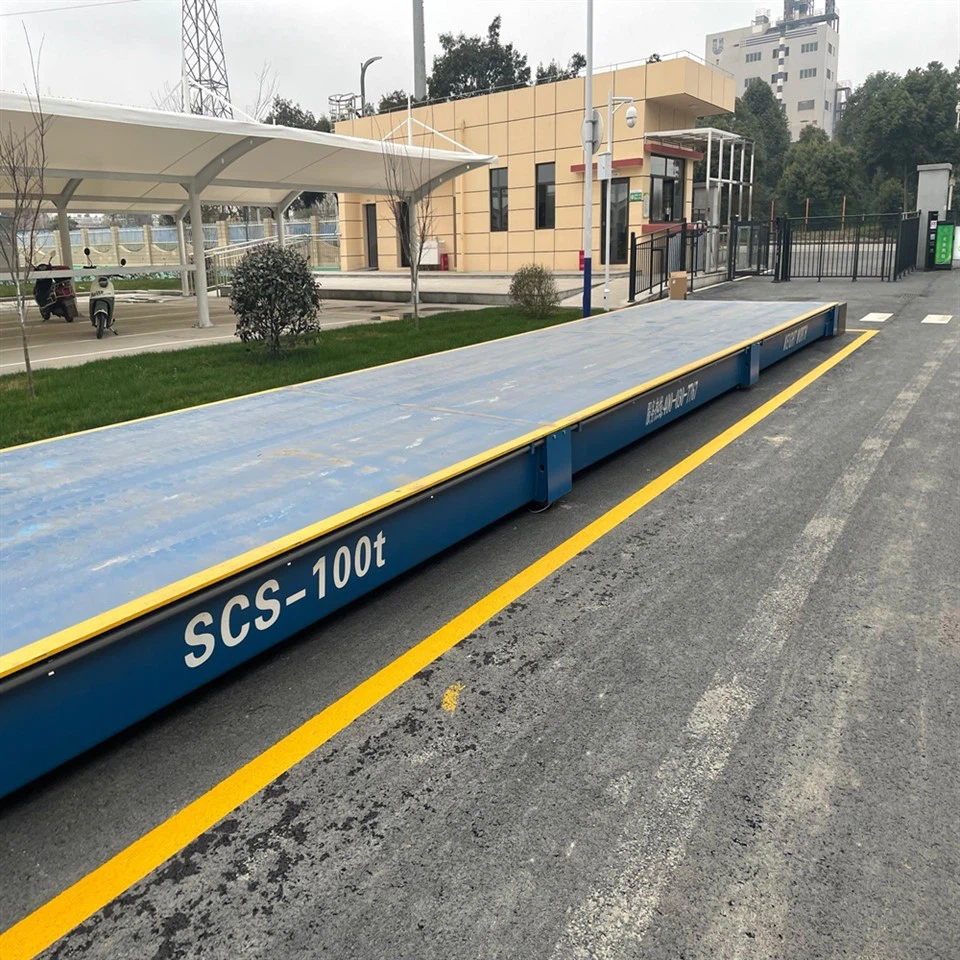
In the realm of industrial weighing, movable bench scales have emerged as a versatile and indispensable tool. As a supplier of Movable Bench Scales, I've witnessed firsthand the diverse applications and the critical role accuracy plays in these devices. In this blog, we'll delve into the factors that influence the accuracy of movable bench scales and explore how precise they truly are.
Understanding Movable Bench Scales
Movable bench scales are designed to offer flexibility in weighing operations. Unlike fixed bench scales, they can be easily moved around a workspace, making them ideal for various industries such as manufacturing, warehousing, and food processing. These scales typically come in different materials, including Stainless Steel Bench Scales and Carbon Steel Bench Scales, each with its own set of advantages.
Stainless steel bench scales are known for their durability and resistance to corrosion, making them suitable for harsh environments. On the other hand, carbon steel bench scales are more cost - effective and offer good strength. Movable bench scales, regardless of the material, are equipped with advanced weighing technology to ensure accurate measurements.
Factors Affecting the Accuracy of Movable Bench Scales
1. Load Cell Technology
The load cell is the heart of any weighing scale, including movable bench scales. It converts the force exerted by the load into an electrical signal, which is then processed to display the weight. High - quality load cells are crucial for accurate weighing. They are designed to have a linear response to the applied load, meaning that the output signal is directly proportional to the weight.
However, load cells can be affected by factors such as overloading, temperature changes, and mechanical shock. Overloading a load cell can cause permanent damage, leading to inaccurate readings. Temperature changes can also affect the electrical properties of the load cell, resulting in measurement errors. To mitigate these issues, modern movable bench scales are equipped with load cells that are temperature - compensated and have a high overload capacity.


2. Calibration
Calibration is a fundamental process for ensuring the accuracy of movable bench scales. Regular calibration helps to adjust the scale to provide accurate readings. During calibration, a known weight is placed on the scale, and the scale is adjusted to match the known weight.
There are two types of calibration: internal and external. Internal calibration is performed using a built - in calibration weight within the scale. External calibration, on the other hand, involves using a certified calibration weight that is traceable to a national or international standard. As a supplier, we recommend that our customers perform external calibration at least once a year, depending on the frequency of use and the environment in which the scale is operating.
3. Environmental Conditions
The environment in which a movable bench scale operates can have a significant impact on its accuracy. Factors such as humidity, vibration, and air currents can all affect the weighing process.
High humidity can cause corrosion of the scale's components, especially in carbon steel scales. Vibration from nearby machinery can cause the load cell to produce inaccurate readings. Air currents can also exert a force on the load, leading to measurement errors. To minimize the effects of environmental conditions, movable bench scales should be placed on a stable surface away from sources of vibration and air currents. In humid environments, stainless steel scales are a better choice due to their corrosion resistance.
4. Scale Design and Construction
The design and construction of a movable bench scale also play a role in its accuracy. A well - designed scale will have a sturdy base and a stable platform to ensure that the load is evenly distributed on the load cell. The scale's display and control panel should be easy to read and operate, and the internal wiring should be properly insulated to prevent electrical interference.
In addition, the size of the weighing platform can affect accuracy. A larger platform may be more suitable for weighing larger or irregularly shaped objects, but it may also be more prone to errors due to uneven loading. As a supplier, we offer a range of platform sizes to meet the diverse needs of our customers.
Measuring the Accuracy of Movable Bench Scales
The accuracy of a movable bench scale is typically expressed as a percentage of the reading or a specified tolerance. For example, a scale with an accuracy of ±0.1% means that the measured weight can deviate by up to 0.1% from the actual weight.
To measure the accuracy of a movable bench scale, a series of tests can be performed. These tests involve placing known weights on the scale and comparing the measured weights with the known weights. The difference between the measured and known weights is then calculated, and the accuracy of the scale is determined based on these results.
It's important to note that the accuracy of a scale can vary depending on the load. In general, scales are more accurate at higher loads than at lower loads. This is because the relative error is smaller when the load is larger.
Real - World Applications and the Need for Accuracy
In many industries, the accuracy of movable bench scales is of utmost importance. In the manufacturing industry, accurate weighing is essential for ensuring the quality of products. For example, in the pharmaceutical industry, precise weighing of ingredients is necessary to ensure the effectiveness and safety of medications.
In the food processing industry, accurate weighing is required for portion control and compliance with regulatory standards. Over - or under - weighing can lead to product waste, customer dissatisfaction, and potential legal issues.
In the warehousing and logistics industry, movable bench scales are used to weigh packages and shipments. Accurate weighing helps to determine shipping costs and ensure that the correct amount of goods is being shipped.
Conclusion
Movable bench scales are a valuable tool in various industries, offering flexibility and convenience in weighing operations. While they are generally accurate, their accuracy can be affected by factors such as load cell technology, calibration, environmental conditions, and scale design.
As a supplier of Movable Bench Scales, we are committed to providing high - quality scales that meet the accuracy requirements of our customers. We offer a range of scales made from different materials and with various features to suit different applications.
If you are in the market for a movable bench scale and need accurate weighing solutions for your business, we invite you to contact us for more information and to discuss your specific requirements. Our team of experts is ready to assist you in finding the perfect scale for your needs.
References
- "Weighing Technology Handbook", John Wiley & Sons
- "Industrial Weighing Systems: Design, Application, and Troubleshooting", McGraw - Hill