Can Movable Bench Scales Be Used in a Laboratory?
In the realm of laboratory work, precision and functionality are of utmost importance. The choice of equipment can significantly impact the accuracy and efficiency of experiments and measurements. One such piece of equipment that often comes into question is the movable bench scale. As a supplier of movable bench scales, I am frequently asked whether these scales can be effectively used in a laboratory setting. In this blog post, I will explore the suitability of movable bench scales for laboratory use, considering their features, advantages, and potential limitations.
Features of Movable Bench Scales
Movable bench scales are designed to be portable and versatile, making them suitable for a variety of applications. They typically feature a compact and lightweight design, allowing them to be easily moved around the laboratory as needed. Many movable bench scales also come with built - in handles or wheels, further enhancing their mobility.
In terms of functionality, these scales offer a wide range of weighing capacities and precision levels. They can measure weights from a few grams to several kilograms, depending on the model. Some movable bench scales are equipped with advanced features such as tare function, which allows for the subtraction of the weight of a container to obtain the net weight of the sample, and unit conversion, enabling measurements to be displayed in different units such as grams, kilograms, ounces, or pounds.
Another important feature of movable bench scales is their durability. They are often constructed from high - quality materials such as stainless steel or carbon steel, which can withstand the rigors of laboratory use. For example, Stainless Steel Bench Scales are resistant to corrosion and easy to clean, making them ideal for laboratories where hygiene is a concern. On the other hand, Carbon Steel Bench Scales offer excellent strength and stability at a more affordable price point.
Advantages of Using Movable Bench Scales in a Laboratory
One of the primary advantages of using movable bench scales in a laboratory is their portability. Laboratories often have multiple workstations or areas where weighing needs to be performed. With a movable bench scale, researchers can easily transport the scale to the location where it is needed, eliminating the need to move heavy samples to a fixed weighing station. This not only saves time but also reduces the risk of sample spillage or damage during transportation.
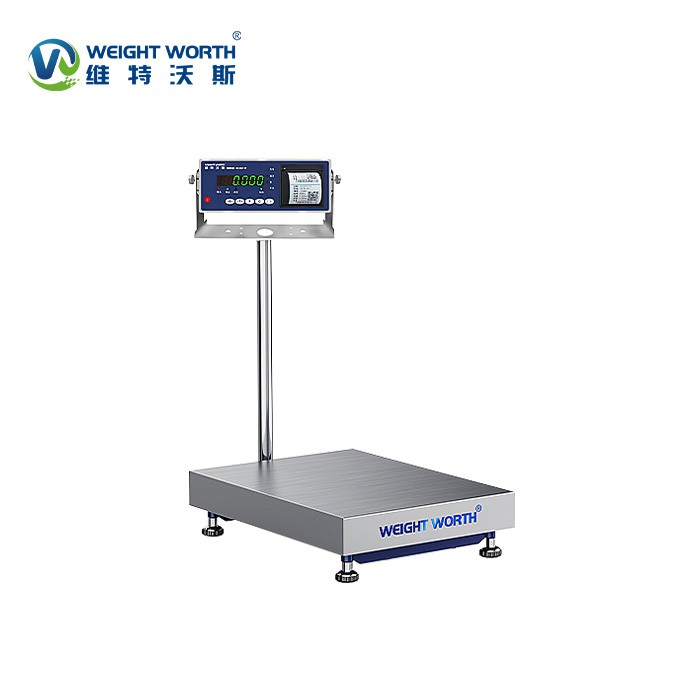

The versatility of movable bench scales is another significant advantage. They can be used for a wide range of laboratory tasks, including weighing chemicals, samples, and reagents. Some models are even suitable for more specialized applications such as weighing small animals in biological research or measuring the weight of precious metals in a materials science laboratory.
In addition, movable bench scales can be a cost - effective solution for laboratories. Compared to larger, fixed - installation scales, movable bench scales are generally more affordable. They also require less space, which can be a valuable asset in laboratories with limited floor area. This allows laboratories to allocate their budget more efficiently and make the most of their available space.
Furthermore, the advanced features of movable bench scales can enhance the accuracy and efficiency of laboratory work. The tare function, for example, simplifies the process of weighing multiple samples in the same container, while unit conversion ensures that measurements are consistent and compatible with different experimental protocols. Some scales also offer data logging capabilities, allowing researchers to record and analyze weighing data over time.
Potential Limitations
While movable bench scales offer many advantages, they also have some potential limitations. One of the main concerns is their precision. Although most movable bench scales can provide accurate measurements within a certain range, they may not be as precise as high - end, stationary laboratory scales. In applications where extremely high precision is required, such as in pharmaceutical research or micro - analysis, a more specialized scale may be necessary.
Another limitation is the potential for interference. Movable bench scales are often battery - operated or use a power cord, which can introduce electrical interference that may affect the accuracy of the measurements. In addition, the movement of the scale itself can cause vibrations, which can also impact the weighing results. Laboratories with strict environmental requirements may need to take these factors into consideration when choosing a scale.
The capacity of movable bench scales may also be a limiting factor in some cases. While they can handle a wide range of weights, there may be situations where larger samples or heavier loads need to be weighed. In such cases, a larger, fixed - installation scale may be more appropriate.
Applications in Different Types of Laboratories
Movable bench scales can find applications in various types of laboratories. In chemical laboratories, they can be used to weigh chemicals for experiments, ensuring accurate dosing and formulation. The portability of the scales allows chemists to quickly move the scale between different fume hoods or workbenches.
In biological laboratories, movable bench scales are useful for weighing samples such as cell cultures, tissues, and small animals. They can also be used to measure the weight of media and reagents used in cell culture and other biological processes.
In food and beverage laboratories, these scales can be employed to weigh ingredients, monitor product quality, and ensure compliance with regulatory requirements. The ability to move the scale around the laboratory makes it easier to perform on - site inspections and quality control checks.
Conclusion
In conclusion, movable bench scales can be a valuable addition to many laboratories. Their portability, versatility, and cost - effectiveness make them suitable for a wide range of applications. However, it is important to consider their potential limitations, especially in terms of precision, interference, and capacity. By carefully evaluating the specific needs of the laboratory and the requirements of the experiments or tasks to be performed, researchers can determine whether a movable bench scale is the right choice for their laboratory.
If you are interested in learning more about our movable bench scales or are considering purchasing one for your laboratory, we encourage you to reach out to us for further information and to discuss your specific requirements. Our team of experts is ready to assist you in finding the most suitable scale for your needs. Whether you need a Label Printing Bench Scales for automated labeling or a stainless steel scale for its durability, we have a wide range of options to choose from.
References
- ASTM International. (Year). Standard test methods for evaluating the performance of laboratory weighing equipment. ASTM Publication.
- ISO. (Year). International standards for weighing and measuring equipment in laboratory settings. ISO Publication.